Solar panel installation
Solar panels in Paphos — costs and the companies covering the district
What photovoltaic systems cost in Paphos, how the district sits against the national range, and what to check before you accept an installer's quote.
7 min read

Maria runs the data collection behind our solar pages. She checks installer registrations against the electrical contractor register, records quoted system prices, and tracks changes to the grant schemes as they are published.
Published
A grid-tied photovoltaic system in Paphos is quoted at roughly €954 to €1,378 per kWp installed, with the middle of the district's market around €1,145. A kWp — kilowatt-peak — is the array's rated output under full sun, so a common domestic system of 5 kWp lands near five times those figures. That range sits a little above the national €900 to €1,300 per kWp, for reasons that are local and specific: corrosion-resistant hardware on the coastal strip, restricted access on the hillside plots, and travel time out to Polis and the Chrysochou valley.
The Paphos market
Three patterns of property dominate the residential trade here. The first is the town and the coastal band through Kato Paphos, Chloraka and Kissonerga: apartment blocks with flat concrete roofs alongside detached villas. Roofs are generally clear and easy to work on, but they are the most exposed to salt air, and the mounting specification matters more here than the panel.
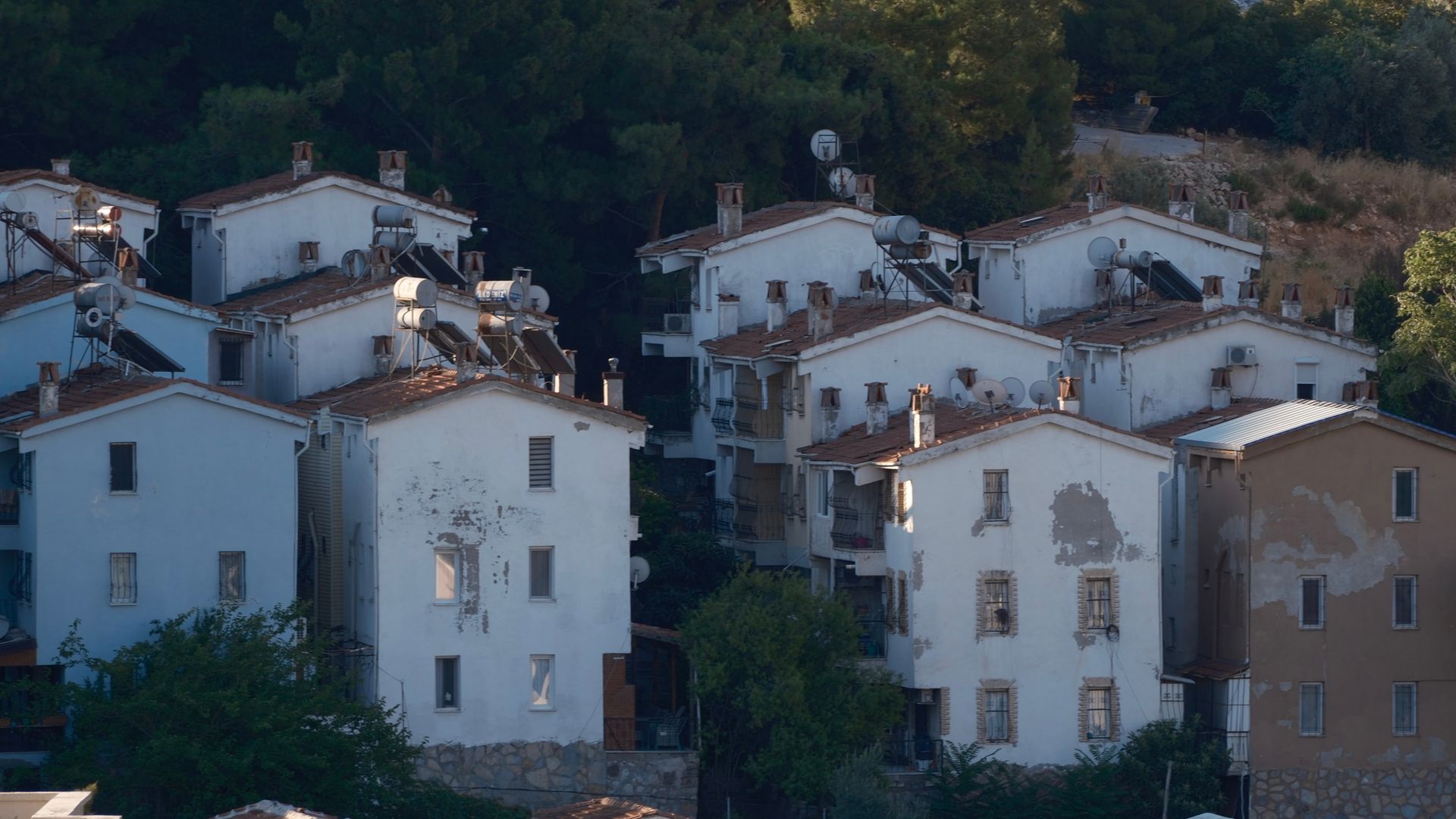
The second is the hillside belt — Peyia above the coast, and inland Tala, Emba and Tsada. Pitched tiled villa roofs are common, plots are terraced across several levels, and the approach roads are narrow and steep. That changes how equipment reaches the roof and how long the crew is on site, not the panel count.
The third pattern is ownership rather than geography. Paphos has an unusually high share of part-year and expatriate owners, and that decides whether a system pays for itself. Under net metering the units you use as they are generated are worth the full retail rate, while exported units are worth considerably less. A house occupied a few weeks a year exports nearly everything it makes; a couple running air conditioning through a Paphos afternoon consumes it. The arithmetic is set out on our payback guide, and it matters more than the price per kWp.
What it costs here versus the national range
Those figures are pulled from the price index when the page loads rather than typed into the text, so they do not go stale. The prices section holds the same data for the other districts.
A quote at the middle of the range should cover panels, inverter, mounting frame and fixings, DC and AC cabling, isolators and protection, the metering arrangement, commissioning and the grid connection paperwork. The items most often left out — and worth asking about before you compare two prices — are scaffolding or lifting equipment, work at the consumer unit, reinstating roof waterproofing where the frame is fixed through it, trenching if the inverter sits away from the array, and bird protection under the panel edges, which older Paphos villa roofs frequently need soon after installation. What moves a quote inside that range is rarely the wattage of the panels; it is access, roof type and the mounting specification.
Local conditions that change the job
Salt is the first. Along Kato Paphos and the seafront strip the air carries salt, so galvanised or marine-grade fixings are the standard specification rather than an upgrade. Panels and inverters are not what corrodes; rails, clamps, bolts and earthing hardware are. Where one seafront quote is noticeably cheaper, this is the first line to compare — the difference is invisible from the ground until the hardware has had a few summers on it.
Steep access is the second. On many Peyia hillside plots the road limits the size of crane and delivery vehicle that can reach the property at all, so panels go up by hand and the labour element rises. Describe the approach when you first make contact; a crew that arrives with the wrong vehicle re-quotes or rushes.
Distance is the third. Polis Chrysochous and the Chrysochou valley sit a long way from the main contractor base in Paphos town, and that travel time is priced into most day rates and into how quickly anyone comes back for a fault.
Shading and dust are easy to underestimate. Mature carob and olive trees around the inland villages throw longer winter shadows than owners expect, and dust on southerly winds settles on glass and reduces output gradually enough that nobody notices. Both are reasons to have the shading assessment in writing and a cleaning interval agreed.
Finally, the grid connection. The application to the Electricity Authority of Cyprus and the metering arrangement under net metering are the installer's work rather than yours, but the timeline belongs to the utility. Do not accept a completion date that quietly assumes a connection date.
Companies covering the district
Solar installation companies covering Paphos
8 companies shown here.
MARK STUART DAVIES
Paphos Centre, Paphos
MARK STUART DAVIES is listed on the Cyprus Energy Service register of certified solar PV installers under registration ΕΦΒ/71/2020. That registration ran to 2026-02-27 and is not current in the register we hold. The entry covers ΠΑΦΟΣ, the paphos district. Details come from the public register and have not been verified with the business.
- Solar panel installation
- Solar panel maintenance
- Commercial solar
- 1
ΑΛΕΞΑΝΔΡΟΣ ΜΙΧΑΗΛ
Emba, Paphos
ΑΛΕΞΑΝΔΡΟΣ ΜΙΧΑΗΛ is listed on the Cyprus Energy Service register of certified solar PV installers under registration ΕΦΒ/432/2026, valid to 2032-03-04. The entry covers ΕΜΠΑ, the paphos district. Details come from the public register and have not been verified with the business.
- Solar panel installation
- Solar panel maintenance
- Commercial solar
ΑΛΕΞΗΣ ΗΡΟΔΟΤΟΥ
Paphos Centre, Paphos
ΑΛΕΞΗΣ ΗΡΟΔΟΤΟΥ is listed on the Cyprus Energy Service register of certified solar PV installers under registration ΕΦΒ/09/2018. That registration ran to 2024-07-25 and is not current in the register we hold. The entry covers ΠΑΦΟΣ, the paphos district. Details come from the public register and have not been verified with the business.
- Solar panel installation
- Solar panel maintenance
- Commercial solar
ΑΝΔΡΕΑΣ ΔΗΜΗΤΡΙΟΥ
Paphos Centre, Paphos
ΑΝΔΡΕΑΣ ΔΗΜΗΤΡΙΟΥ is listed on the Cyprus Energy Service register of certified solar PV installers under registration ΕΦΒ/88/2020. That registration ran to 2026-07-08 and is not current in the register we hold. The entry covers ΠΑΦΟΣ, the paphos district. Details come from the public register and have not been verified with the business.
- Solar panel installation
- Solar panel maintenance
- Commercial solar
- 1
ΑΝΔΡΕΑΣ ΔΙΟΓΕΝΟΥΣ
Pomos, Paphos
ΑΝΔΡΕΑΣ ΔΙΟΓΕΝΟΥΣ is listed on the Cyprus Energy Service register of certified solar PV installers under registration ΕΦΒ/93/2020, valid to 2026-09-22. The entry covers ΠΩΜΟΣ, the paphos district. Details come from the public register and have not been verified with the business.
- Solar panel installation
- Solar panel maintenance
- Commercial solar
- 1
ΑΝΤΩΝΗΣ ΔΙΟΓΕΝΟΥΣ
Nea Dhimmata, Paphos
ΑΝΤΩΝΗΣ ΔΙΟΓΕΝΟΥΣ is listed on the Cyprus Energy Service register of certified solar PV installers under registration ΕΦΒ/367/2024, valid to 2030-12-03. The entry covers ΝΕΑ ΔΗΜΜΑΤΑ, the paphos district. Details come from the public register and have not been verified with the business.
- Solar panel installation
- Solar panel maintenance
- Commercial solar
- 1
ΑΝΤΩΝΗΣ ΚΥΡΙΑΚΟΥ
Paphos Centre, Paphos
ΑΝΤΩΝΗΣ ΚΥΡΙΑΚΟΥ is listed on the Cyprus Energy Service register of certified solar PV installers under registration ΕΦΒ/128/2021, valid to 2027-09-14. The entry covers ΠΑΦΟΣ, the paphos district. Details come from the public register and have not been verified with the business.
- Solar panel installation
- Solar panel maintenance
- Commercial solar
- 1
ΑΡΙΣΤΟΣ ΚΑΡΜΙΩΤΗΣ
Anarita, Paphos
ΑΡΙΣΤΟΣ ΚΑΡΜΙΩΤΗΣ is listed on the Cyprus Energy Service register of certified solar PV installers under registration ΕΦΒ/428/2026, valid to 2032-03-04. The entry covers ΑΝΑΡΙΤΑ, the paphos district. Details come from the public register and have not been verified with the business.
- Solar panel installation
- Solar panel maintenance
- Commercial solar
These are companies whose registration we have checked, listed in no order of merit. We hold no ratings, testimonials or customer reviews, so use the list as a shortlist to approach and judge the quotes yourself. The areas section covers the district more widely, and the Paphos solar installation page gathers the local work in one place.
Get these in writing before you commit: system size in kWp and modelled annual output, panel and inverter makes with their separate warranty periods, the corrosion specification near the sea, how roof penetrations are sealed and reinstated, who submits the grid connection application, and what the price excludes. Professional registers are held by ETEK, and anyone doing notifiable electrical work should give you their registration on request.
The residential scheme contributes toward a grid-connected system on a primary residence, within size limits and subject to a means test, and the application is made before installation begins rather than afterwards. That catches people out in Paphos more than elsewhere, because much of the district's housing is a second or holiday home and does not meet the primary-residence condition at all.
Town by town
Paphos town and Kato Paphos. Flat concrete roofs on blocks, mixed villa stock elsewhere. Straightforward where the roof is private; on a block it is common property and needs committee agreement, usually the longest item in the timeline. Marine-grade fixings within sight of the sea.
Chloraka and Kissonerga. Coastal, largely low-rise and detached, and among the more straightforward work in the district — clear roofs, van access, the same salt specification as Kato Paphos.
Peyia and Coral Bay. Hillside plots where access decides the price. Expect a higher labour element and a site visit before any firm figure.
Tala, Emba and Tsada. Inland and higher, so less salt but more pitched tiled roofs needing proper hooks and a careful waterproofing detail. Check tree shading on long-established plots.
Polis Chrysochous and the Chrysochou valley. Fewer installers based locally, travel time built into day rates. Ask about call-out response and whether maintenance visits are charged separately.
Common questions
How do I compare installers if there are no reviews on this site?
Compare the written quotes rather than the headline prices. Ask for the modelled annual output and the assumptions behind it, check the corrosion specification if you are near the coast, ask for nearby addresses with a comparable system, and read the exclusions. On a coastal roof the cheapest quote is usually the one missing marine-grade hardware.
What size system should I fit?
Size it to your daytime use rather than your annual bill. A 5 kWp array in Cyprus generates in the region of 7,500 to 8,500 kWh a year depending on orientation and shading, but only the share you consume as it is produced is worth the full retail rate. If the house stands empty on weekdays, a smaller system often pays back sooner than a larger one.
Can I fit panels on a flat in a Paphos apartment block?
Only with the management committee's agreement, since the roof is common property. Where it is already occupied by water tanks, lift plant and air conditioning condensers there may be no usable area for one flat, and a building-wide system is the only route.
Does the sea air shorten the life of a system in Kato Paphos?
It changes what fails first. Panels and inverters are not the weak point; rails, clamps, bolts and earthing hardware are. Marine-grade fixings specified at the outset, and glass rinsed at a regular interval, keep a coastal installation performing as it did at commissioning.
How long does the work take in Paphos?
The roof work on a typical domestic system is a matter of days. Everything around it varies: the shading assessment, committee permission on a block, access on a hillside plot, and the connection and metering, which run to the utility's timetable. Plan on the connection deciding the finish date.
Sources
- Ministry of Energy, Commerce and Industry — household energy support schemes — retrieved 2026-07-28
- Electricity Authority of Cyprus — domestic tariffs and connections — retrieved 2026-07-28
- Cyprus Energy Regulatory Authority — net metering framework — retrieved 2026-07-28
- Cyprus Scientific and Technical Chamber (ETEK) — registered professionals — retrieved 2026-07-28
01More on this topic
Same cluster.Different question.
 8 min read
How to Choose a Solar Panel Company in Cyprus
What to check before you sign with a solar company in Cyprus: registrations, the grid connection application, and what a complete written quote must list.
 7 min read
Solar Panel in Nicosia: Costs and Local Companies
What a solar panel installation in Nicosia, Cyprus involves, the published cost level, and the grid and grant details that shape it.
 7 min read
Solar Panel in Limassol: Costs and Local Companies
What a solar system costs installed in Limassol, how high-rise roofs, salt air and grid capacity move the quote, and what to check before you sign.
 7 min read
Solar Panel in Larnaca: Costs and Local Companies
What a solar panel installation in Larnaca, Cyprus involves, the published cost level, and the grid and grant details that shape it.
 7 min read
Solar Panel in Famagusta: Costs and Local Companies
What a solar panel installation in Famagusta, Cyprus involves, the published cost level, and the grid and grant details that shape it.
Where to go next
Companies, districts and the rest of the guides on this subject.
Thinking of doing this?Get up to five quotes, free.
Send us your roof and your electricity bill and we will gather quotes from installers who work from your numbers.