
Cyprus · solar panel installation
Solar panel installation in Cyprus.Compare several quotes at once.
Solar panels in Cyprus benefit from some of the strongest sunshine in the EU, but whether they pay off for your household depends on your roof, your daily routine and the quality of the installation. This guide walks through each factor in plain terms.
- Grant amounts cited
- Payback on current tariffs
- Installer registrations checked
Solar panel installation companies in Cyprus
12 companies shown here.
Ranked number 2:Limassol Electrician 24/7
Electrical work · Germasogeia, Limassol
Limassol Electrician 24/7 is an electrical contractor in Germasogeia, in the Limassol district. Recorded services include fault finding, consumer units, rewiring.
- Rewiring
- Solar panel maintenance
- Fault finding
- Consumer units
- +1 more
Ranked number 3:Vascon Solar Experts LTD
Dali, Nicosia
Vascon Solar Experts LTD is an energy supplier in Dali, in the Nicosia district.
- Battery storage
- Solar panel maintenance
Ranked number 4:Kyriakos Louka & Yioi LTD (Office)
Electrical work · Strovolos, Nicosia
Kyriakos Louka & Yioi LTD (Office) is an electrical contractor in Strovolos, in the Nicosia district. Recorded services include fault finding, consumer units, rewiring.
- Rewiring
- Solar panel maintenance
- Fault finding
- Consumer units
- +1 more
- 1
Ranked number 5:KHALIL ABUSHALHA
Larnaca Centre, Larnaca
KHALIL ABUSHALHA is listed on the Cyprus Energy Service register of certified solar PV installers under registration ΕΦΒ/305/2024, valid to 2030-01-12. The entry covers ΛΑΡΝΑΚΑ, the larnaca district. Details come from the public register and have not been verified with the business.
- Solar panel maintenance
- Commercial solar
Ranked number 6:MARK STUART DAVIES
Paphos Centre, Paphos
MARK STUART DAVIES is listed on the Cyprus Energy Service register of certified solar PV installers under registration ΕΦΒ/71/2020. That registration ran to 2026-02-27 and is not current in the register we hold. The entry covers ΠΑΦΟΣ, the paphos district. Details come from the public register and have not been verified with the business.
- Solar panel maintenance
- Commercial solar
- 1
Ranked number 7:MOUSSA FAHER
Lakatamia, Nicosia
MOUSSA FAHER is listed on the Cyprus Energy Service register of certified solar PV installers under registration ΕΦΒ/424/2026, valid to 2032-03-04. The entry covers ΛΑΚΑΤΑΜΙΑ, the nicosia district. Details come from the public register and have not been verified with the business.
- Solar panel maintenance
- Commercial solar
- 1
Ranked number 8:PATRICK MICHAEL MC CLUSKEY
Strovolos, Nicosia
PATRICK MICHAEL MC CLUSKEY is listed on the Cyprus Energy Service register of certified solar PV installers under registration ΕΦΒ/338/2024, valid to 2030-06-21. The entry covers ΣΤΡΟΒΟΛΟΣ, the nicosia district. Details come from the public register and have not been verified with the business.
- Solar panel maintenance
- Commercial solar
Ranked number 9:STEVEN RUSH
Paralimni, Famagusta
STEVEN RUSH is listed on the Cyprus Energy Service register of certified solar PV installers under registration ΕΦΒ/64/2020. That registration ran to 2025-12-17 and is not current in the register we hold. The entry covers ΠΑΡΑΛΙΜΝΙ, the famagusta district. Details come from the public register and have not been verified with the business.
- Solar panel maintenance
- Commercial solar
Ranked number 10:ΑΓΓΕΛΑ ΑΝΔΡΕΟΥ
Nicosia Centre, Nicosia
ΑΓΓΕΛΑ ΑΝΔΡΕΟΥ is listed on the Cyprus Energy Service register of certified solar PV installers under registration ΕΦΒ/68/2020. That registration ran to 2026-01-28 and is not current in the register we hold. The entry covers ΛΕΥΚΩΣΙΑ, the nicosia district. Details come from the public register and have not been verified with the business.
- Solar panel maintenance
- Commercial solar
- 1
Ranked number 11:ΑΓΓΕΛΟΣ ΑΓΓΕΛΗ
Kokkinotrimithia, Nicosia
ΑΓΓΕΛΟΣ ΑΓΓΕΛΗ is listed on the Cyprus Energy Service register of certified solar PV installers under registration ΕΦΒ/217/2022, valid to 2028-12-22. The entry covers ΜΑΜΜΑΡΙ, the nicosia district. Details come from the public register and have not been verified with the business.
- Solar panel maintenance
- Commercial solar
Ranked number 12:ΑΓΓΕΛΟΣ ΜΗΛΙΑΤΗΣ
Limassol Centre, Limassol
ΑΓΓΕΛΟΣ ΜΗΛΙΑΤΗΣ is listed on the Cyprus Energy Service register of certified solar PV installers under registration ΕΦΒ/87/2020. That registration ran to 2026-07-08 and is not current in the register we hold. The entry covers ΛΕΜΕΣΟΣ, the limassol district. Details come from the public register and have not been verified with the business.
- Solar panel maintenance
- Commercial solar
- 1
Ranked number 13:ΑΓΓΕΛΟΣ ΧΕΙΜΩΝΑΣ
Lakatamia, Nicosia
ΑΓΓΕΛΟΣ ΧΕΙΜΩΝΑΣ is listed on the Cyprus Energy Service register of certified solar PV installers under registration ΕΦΒ/404/2025, valid to 2031-05-19. The entry covers ΛΑΚΑΤΑΜΙΑ, the nicosia district. Details come from the public register and have not been verified with the business.
- Solar panel maintenance
- Commercial solar
Does solar actually pay off for your household?
The honest answer is that it depends less on the panels and more on you. Two identical systems on two identical roofs can produce very different savings, because the value of solar comes from replacing electricity you would otherwise buy. Cyprus has among the highest solar irradiance in the EU — irradiance simply means the amount of solar energy landing on a surface — so the generation side of the equation is rarely the problem. The question is what happens to that generation once it exists.
Your consumption pattern is the biggest variable
Every unit of electricity you consume at the moment your panels produce it is a unit you no longer pay for at the full retail rate. Every unit you export is worth less to you, however the export is credited. That single distinction drives almost everything.
Think about when your home actually uses power. If someone is home during the day — running the washing machine, cooking, working from home with the air conditioning on — a large share of your generation gets used directly, and the system earns its keep quickly. If the house is empty from morning until evening and your consumption peaks after sunset, most of your generation flows out to the grid and your savings shrink accordingly.
You can shift habits to close this gap. Timers on the washing machine, dishwasher and water heating move consumption into daylight hours. An electric vehicle charged at midday rather than overnight does the same. None of this requires new technology, only a change in routine, and it is often the cheapest "upgrade" a solar household can make.
Roof orientation, pitch and shading
A south-facing roof captures the most energy over the year. But Cyprus is far enough south, with strong enough sunshine, that east- and west-facing roofs remain genuinely viable — an east-west arrangement produces less at midday and more in the morning and evening, which can match a working household's routine better than a pure south array.
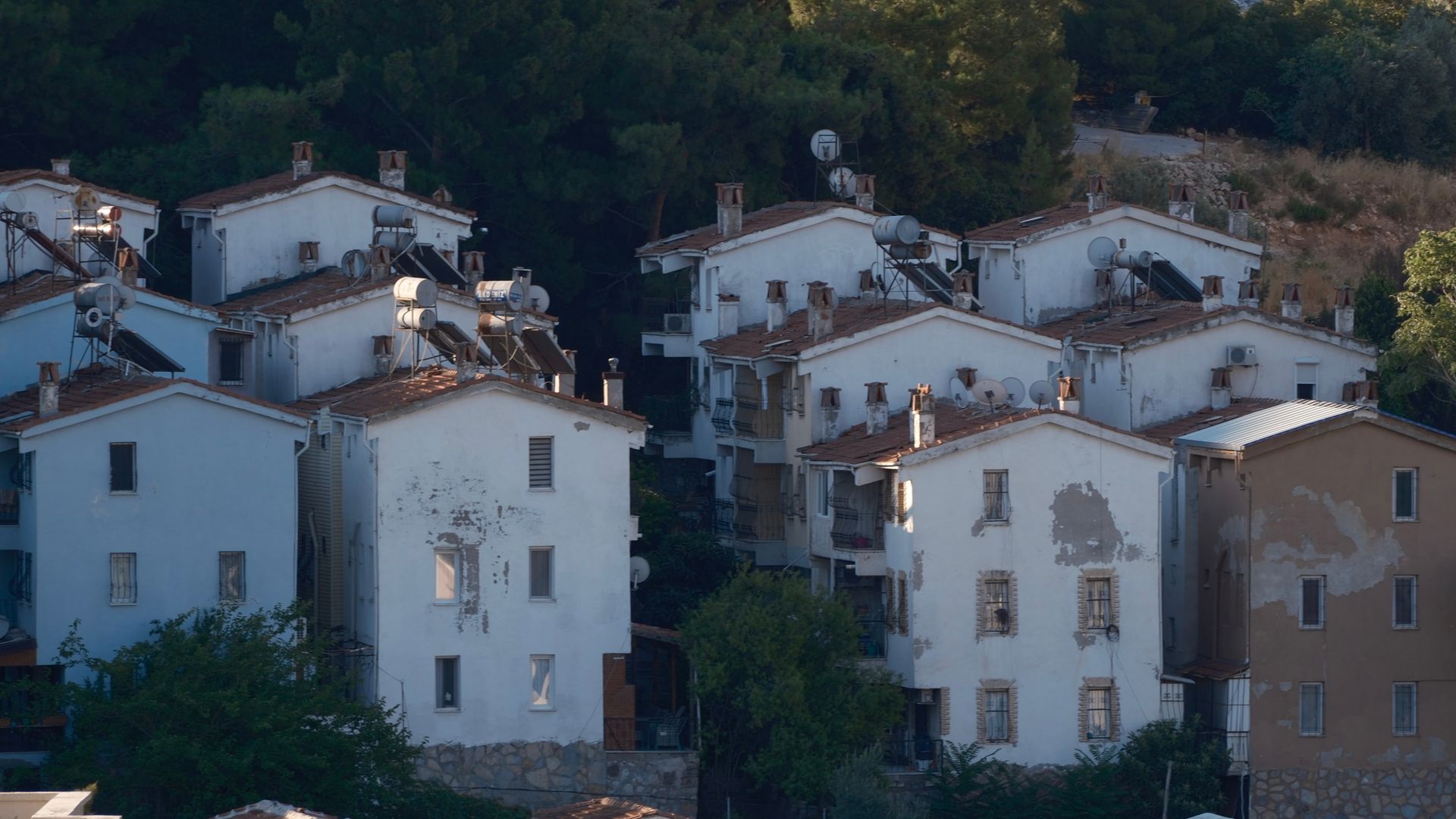
Pitch matters less than people expect. Most Cypriot roofs, whether pitched or flat with mounting frames, can be brought close enough to the ideal angle that the difference is modest. What is not modest is shading. A chimney, a satellite dish, a taller neighbouring building or a single tree can drag down the output of far more than the panels it directly covers, because panels wired together in a series group — called a string — are limited by their weakest member. A good installer will survey shading across the whole day and the whole year, not just glance at the roof at noon, and will design the wiring or specify electronics that limit the damage where shade is unavoidable.
One more Cyprus-specific note: extreme heat reduces panel efficiency. Panels are rated at a standard test temperature, and a scorching July rooftop runs far hotter than that. This does not undo the advantage of the Cypriot climate — the sheer amount of sunshine more than compensates — but it is why good airflow under the panels matters and why midsummer output can plateau even as the sun blazes.
How connection to the grid works
You cannot simply wire panels into your home and start exporting. A residential system must be applied for, approved and metered by the grid operator before it is connected. In practice your installer prepares and submits this application for you, but it is worth understanding what you are signing up to.
Export versus offset — the distinction that matters
Under classic net metering, the electricity you export is offset against the electricity you import, with the grid acting rather like a battery for your surplus: what you send out in the afternoon reduces what you are billed for in the evening. Under net billing, the newer style of arrangement, exports are credited at a different value from the retail price of imports — which means a unit you export is no longer worth the same as a unit you avoid importing.
The practical consequence is the same point made above: under net billing, self-consumption becomes more valuable and pure export less so. Ask any installer quoting you which scheme your application would fall under, because it changes how the system should be sized. A household on net billing often does better with a system matched to its daytime consumption than with the largest array the roof can hold. That arithmetic is also what turns storage from a luxury into a calculation, and the sizing method — deficit before product — is worked through in the technical reference on battery storage.
Timing and paperwork
Applications take time to process, and approval must come before connection. Factor this into your expectations — the gap between signing a contract and generating your first unit is measured in weeks or months, not days, and the installation itself is usually the quickest part. A reputable installer will be upfront about the current processing times rather than promising a date they cannot control.
Grants and support schemes
Government support for residential solar exists in Cyprus and has run through repeated funding rounds. The details — who qualifies, how much is available, and when applications open and close — change from scheme to scheme, sometimes at short notice when a funding pot is exhausted.
For that reason, treat any specific figure you read online with suspicion unless it comes from the administering authority's current published scheme. The sensible approach is to ask each installer quoting you what support is open right now and whether they will handle the application, then verify the answer against the official source. Do not let a grant deadline pressure you into signing with an installer you have not properly compared — a rushed installation outlasts any grant.
How to compare installer quotes properly
Quotes for the same roof can vary widely, and the headline price alone tells you very little. Here is how to put quotes on a level footing.
Compare on a per-kWp basis
A kWp — kilowatt-peak — is the standard measure of a solar system's rated capacity, and every quote should state it. Divide each quote's total price by its kWp figure and you get a per-kWp cost that lets you compare a larger system against a smaller one fairly. A quote that looks cheaper overall may simply be for a smaller system; a quote that looks expensive may include equipment or works the others have quietly left out.
Check what the price includes before you divide. Mounting structure, cabling, the grid application, scaffolding or access equipment, and commissioning should all be in scope. The most common source of a surprisingly low quote is something missing rather than something cheap.
Judge equipment by type, not by brand promises
Installers will name brands, and brands vary in reputation — but for comparison purposes, focus on the type and class of equipment. Are the panels a current mainstream technology with a full manufacturer's warranty valid in the EU? Is the inverter — the box that converts the panels' direct current into the alternating current your home uses — sized appropriately for the array, from a manufacturer with local support? If shading is an issue, has the installer specified panel-level electronics or a string layout that addresses it, and can they explain why?
An installer who can explain why they chose each component for your roof is worth more than one reciting a brand name. Ask what happens if a component fails in year five: who do you call, and who deals with the manufacturer?
Workmanship warranty versus product warranty
These are different things, and conflating them is the oldest trick in the book. The product warranty comes from the manufacturer and covers the panel or inverter itself. The workmanship warranty comes from the installer and covers the installation — the mounting, the wiring, the waterproofing of every roof penetration. A long panel warranty is worthless against a leak caused by a badly sealed bracket, because that is a workmanship claim.
Ask each installer, in writing: how long is your workmanship warranty, what does it cover, and what happens if your company ceases trading? The answers separate established firms from here-today operations more reliably than any brochure.
Living with a solar system
Solar is genuinely low-maintenance, but low is not zero, and it helps to know what to expect before you buy rather than after.
Dust is the everyday reality in Cyprus. Between the dry summer and the dust episodes that blow in from the south, panels accumulate a film that reduces output, and rain does not always arrive often enough to wash it away. Occasional cleaning — with soft equipment and without harsh chemicals — restores the loss. Many owners schedule it after the dust season; some installers offer it as a service.
The inverter is the component most likely to need attention within the system's lifetime. Panels themselves degrade slowly over decades, but inverters work hard in the Cypriot heat and generally wear out sooner, so it is realistic to budget for a replacement at some point during the life of the panels. Siting the inverter in shade or indoors, with good ventilation, extends its life noticeably.
Finally, use the monitoring. Almost every modern system comes with an app showing live and historical generation. Glance at it monthly: a sudden, sustained drop that does not match the weather is your early warning that something — a tripped inverter, a failed component, a new source of shading — needs looking at. Most faults announce themselves in the data long before they show up on a bill.
The sensible order to do things
Get your recent electricity bills together so you know your consumption. Think honestly about when your household uses power. Invite several quotes, put them on a per-kWp footing, and ask every installer the same questions about scheme, equipment and warranties. Verify any grant claims against the official source. Then choose the installer whose answers were clearest — not necessarily the cheapest sheet of paper. A solar system is a decades-long purchase, and in Cyprus the sunshine is the one part of the equation you never have to worry about.
Common questions
- Are solar panels worth it for a house in Cyprus?
- For most owner-occupied homes with an unshaded roof, yes — Cyprus has among the highest solar irradiance in the EU, so panels generate strongly for much of the year. The payback depends on how much of that generation you use during daylight hours, so households that run appliances, air conditioning or a heat pump in the daytime benefit most.
- Do I need permission to install solar panels in Cyprus?
- You need an approved application to the grid operator before your system can be connected and metered, and your installer normally handles the paperwork. Planning consent is usually straightforward for ordinary roof-mounted systems, though listed buildings and some protected areas carry extra conditions, so always confirm your property's status first.
- How does net metering work in Cyprus?
- Under net metering, electricity you export to the grid is offset against electricity you import, so the grid effectively acts as a store for your surplus. Newer arrangements credit exports differently from imports, which makes self-consumption more valuable. Your installer applies to the grid operator on your behalf, and the scheme you join shapes your savings.
- Are there grants for solar panels in Cyprus?
- Yes, government support schemes for residential solar exist in Cyprus, but the amounts, eligibility rules and application windows change from round to round. Check the current scheme directly with the administering authority or ask installers what is open now, and never rely on a figure quoted in an old article or advert when planning your budget.
- Which direction should solar panels face in Cyprus?
- A south-facing roof gives the highest total output, but east- or west-facing panels still perform well in Cyprus because the island's sunshine is so strong. An east-west split can actually suit households better, spreading generation across morning and evening when people are home. Shading matters far more than a few degrees of orientation.
01Before you sign
A solar panel installation quoteshould answer four questions.
Payback in Cyprus is decided by your bill, your roof and the grant — in that order. Make every quote show its numbers.
Ask for the yield assumption
A Cyprus system should be modelled on Cypriot irradiance and your actual consumption, not a European average.
Your numbers
Check the grant arithmetic
The scheme changes and the amounts are published. A quote that bakes in an old grant figure wrecks the payback maths.
Current scheme
Get the net-metering position
What you export and what you offset are different figures at current EAC tariffs. The quote should show both.
EAC tariffs
Compare per kWp installed
System sizes differ, so headline prices do not compare. Divide by the kWp and the quotes line up.
Per kWp
Need solar panel installation?One form. Up to five quotes.
Send us your roof and your electricity bill and we will gather quotes from installers who work from your numbers.