
Cyprus · solar water heating
Solar water heating in Cyprus.Compare several quotes at once.
A solar water heater is the most common piece of solar equipment on any Cypriot roof, and in most households it quietly does more useful work than anything else up there. Here is how the technology works, when to replace an ageing unit, and what to check before you buy.
- Grant amounts cited
- Payback on current tariffs
- Installer registrations checked
Solar water heating companies in Cyprus
12 companies shown here.
Ranked number 2:Ο υδραλικός στο σπίτι σας Μάριος Κασινιδης & υιοί ltd
Plumbing · Nicosia Centre, Nicosia
Ο υδραλικός στο σπίτι σας Μάριος Κασινιδης & υιοί ltd is a plumbing business in Nicosia Centre, in the Nicosia district. Recorded services include leak detection, bathroom installation, water tanks.
- Replumbing
- Bathroom renovation
- Leak detection
- Bathroom installation
- +2 more
Ranked number 3:Charalambos Thoma & Sons
Plumbing · Lakatamia, Nicosia
Charalambos Thoma & Sons is a plumbing business in Lakatamia, in the Nicosia district. Recorded services include leak detection, bathroom installation, water tanks.
- Replumbing
- Bathroom renovation
- Leak detection
- Bathroom installation
- +2 more
Ranked number 4:Moudouros
Plumbing · Nicosia Centre, Nicosia
Moudouros is a plumbing business in Nicosia Centre, in the Nicosia district. Recorded services include leak detection, bathroom installation, water tanks.
- Replumbing
- Bathroom renovation
- Leak detection
- Bathroom installation
- +2 more
- 1
Ranked number 5:SPAS SHINDAROV
Paphos Centre, Paphos
SPAS SHINDAROV is listed on the Cyprus Energy Service register of certified solar water heating installers under registration ΕΗΘ/52/2023, valid to 2029-12-18. The entry covers ΠΑΦΟΣ, the paphos district. Details come from the public register and have not been verified with the business.
- 1
Ranked number 6:ΑΛΕΞΑΝΔΡΟΣ ΑΛΕΞΙΟΥ
Kissonerga, Paphos
ΑΛΕΞΑΝΔΡΟΣ ΑΛΕΞΙΟΥ is listed on the Cyprus Energy Service register of certified solar water heating installers under registration ΕΗΘ/31/2022, valid to 2028-02-15. The entry covers ΚΙΣΣΟΝΕΡΓΑ, the paphos district. Details come from the public register and have not been verified with the business.
- 1
Ranked number 7:ΑΝΔΡΕΑΣ ΑΝΔΡΕΟΥ
Kiti, Larnaca
ΑΝΔΡΕΑΣ ΑΝΔΡΕΟΥ is listed on the Cyprus Energy Service register of certified solar water heating installers under registration ΕΗΘ/36/2022, valid to 2028-03-14. The entry covers ΠΕΡΒΟΛΙΑ, the larnaca district. Details come from the public register and have not been verified with the business.
- 1
Ranked number 8:ΑΝΔΡΕΑΣ ΑΝΤΩΝΙΟΥ
Larnaca Centre, Larnaca
ΑΝΔΡΕΑΣ ΑΝΤΩΝΙΟΥ is listed on the Cyprus Energy Service register of certified solar water heating installers under registration ΕΗΘ/37/2022, valid to 2028-03-14. The entry covers ΛΑΡΝΑΚΑ, the larnaca district. Details come from the public register and have not been verified with the business.
- 1
Ranked number 9:ΑΝΔΡΕΑΣ ΙΩΑΝΝΙΔΗΣ
Strovolos, Nicosia
ΑΝΔΡΕΑΣ ΙΩΑΝΝΙΔΗΣ is listed on the Cyprus Energy Service register of certified solar water heating installers under registration ΕΗΘ/42/2022, valid to 2028-06-07. The entry covers ΣΤΡΟΒΟΛΟΣ, the nicosia district. Details come from the public register and have not been verified with the business.
- 1
Ranked number 10:ΑΝΔΡΕΑΣ ΚΑΝΑΡΗ
Paphos Centre, Paphos
ΑΝΔΡΕΑΣ ΚΑΝΑΡΗ is listed on the Cyprus Energy Service register of certified solar water heating installers under registration ΕΗΘ/49/2023, valid to 2029-06-26. The entry covers ΠΑΦΟΣ, the paphos district. Details come from the public register and have not been verified with the business.
- 1
Ranked number 11:ΑΡΙΣΤΟΔΗΜΟΣ ΣΤΕΦΑΝΟΥ
Lakatamia, Nicosia
ΑΡΙΣΤΟΔΗΜΟΣ ΣΤΕΦΑΝΟΥ is listed on the Cyprus Energy Service register of certified solar water heating installers under registration ΕΗΘ/40/2022, valid to 2028-05-16. The entry covers ΛΑΚΑΤΑΜΙΑ, the nicosia district. Details come from the public register and have not been verified with the business.
- 1
Ranked number 12:ΑΥΞΕΝΤΗΣ ΠΟΛΥΚΑΡΠΟΥ
Agia Varvara, Paphos
ΑΥΞΕΝΤΗΣ ΠΟΛΥΚΑΡΠΟΥ is listed on the Cyprus Energy Service register of certified solar water heating installers under registration ΕΗΘ/38/2022, valid to 2028-05-16. The entry covers ΑΓΙΑ ΒΑΡΒΑΡΑ, the paphos district. Details come from the public register and have not been verified with the business.
- 1
Ranked number 13:ΓΕΩΡΓΙΟΣ ΑΛΕΞΑΝΔΡΟΥ
Limassol Centre, Limassol
ΓΕΩΡΓΙΟΣ ΑΛΕΞΑΝΔΡΟΥ is listed on the Cyprus Energy Service register of certified solar water heating installers under registration ΕΗΘ/33/2022, valid to 2028-03-14. The entry covers ΛΕΜΕΣΟΣ, the limassol district. Details come from the public register and have not been verified with the business.
The most Cypriot technology there is
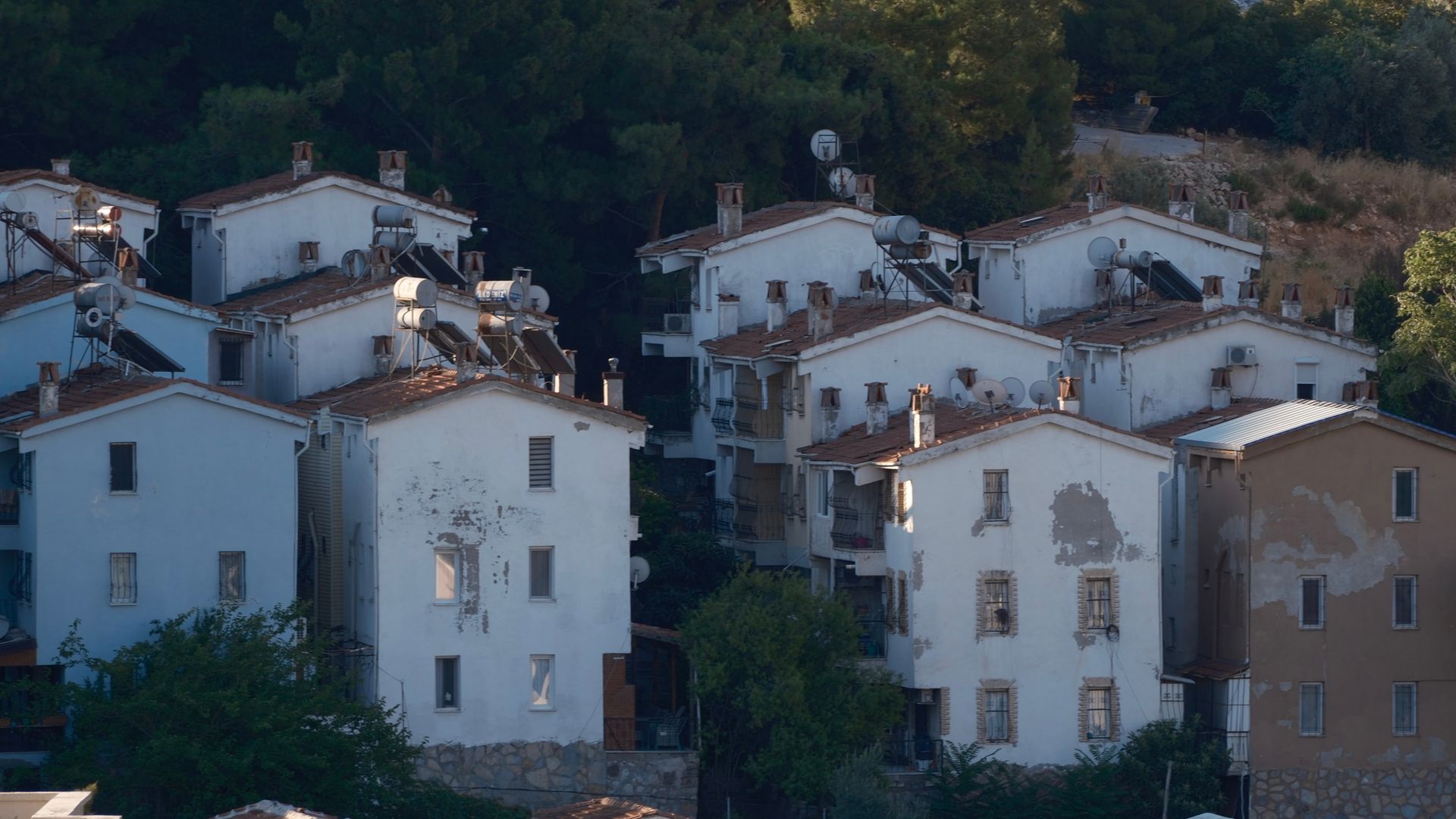
Drive through any town on the island and look up: the tank-and-panel unit on almost every roof is a solar water heater, and Cyprus adopted them earlier and more completely than almost anywhere in Europe. There is a good reason. Heating water is one of the biggest energy demands in an ordinary household, the island has among the highest solar irradiance in the EU, and turning sunshine directly into hot water is a remarkably efficient conversion — far more so, for this one job, than making electricity first and heating water with it afterwards.
This page covers solar thermal — systems that heat water. If you are looking for photovoltaic panels, which generate electricity, that is a different technology covered elsewhere on this site. The two share a roof and a sun, and nothing else.
How the system actually works
The classic Cypriot arrangement is a thermosiphon system. Flat-plate collectors — glazed panels containing a dark absorber and water channels — sit on the roof facing the sun. Water inside them heats up, and because hot water is less dense than cold, it rises by itself into an insulated storage tank mounted just above the collectors. Cooler water sinks back down to be heated in turn. The whole cycle runs on physics alone: no pump, no controller, nothing to break in the circulation itself.
The tank stores the day's heat so that showers in the evening and the following morning still run hot. An electric immersion element inside the tank acts as backup for cloudy winter spells or unusually heavy use, switched manually or on a timer. Many homes also plumb in a connection to the central heating boiler where one exists, so winter hot water does not depend on electricity at all.
Open systems, closed systems and pressure
Two variations are worth understanding before you talk to an installer. In an open (direct) system, the water you shower in is the same water that passes through the collector. It is simple and effective, but the collector suffers directly from whatever is in your water — and much of Cyprus has hard water, meaning water rich in dissolved minerals that form scale when heated. In a closed (indirect) system, a separate fluid circulates through the collector and transfers its heat to your water through a coil in the tank, protecting the collector from scale at the cost of slightly more complexity.
Pressure matters too. Older Cypriot homes fed their heater from a cold tank on the roof at low pressure; modern homes increasingly run pressurised systems fed straight from the mains, which give a stronger shower but demand a tank built to take the pressure. If you are replacing an old unit, tell the installer how your home's plumbing is arranged — swapping a low-pressure tank for a pressurised one involves more than lifting one unit off and another on.
When to replace rather than repair
Solar water heaters fail gradually, not suddenly, which is why so many roofs carry units performing at a fraction of their original ability while the electric backup quietly does the real work. Signs that yours is on the way out:
The water is cooler than it used to be
Scale is the usual thief. Heated hard water deposits minerals inside the tank and collector channels, and the build-up insulates the water from the very heat it is supposed to absorb. Light scaling can sometimes be flushed or descaled by a service technician; heavy, long-neglected scaling in an old tank is usually terminal, because the descaling process can open up corrosion pinholes the scale itself was plugging.
The tank is weeping or streaking
Rust streaks below the tank, dampness around fittings, or a white crust at the joints mean corrosion has reached the shell. Tanks fail before collectors as a rule, and a corroded tank is a replacement, not a repair. Some installers can fit a new tank to existing collectors if the collectors are sound and compatible, which is worth asking about — it is considerably cheaper than a full new system.
The glass is broken or the frame has decayed
A cracked collector glass lets in moisture, which fogs the glazing and corrodes the absorber. One damaged collector on an otherwise healthy system is usually replaceable on its own. Perished pipe insulation — the foam sleeves that crumble after years of UV exposure — is a cheap fix that pays for itself, and a good service visit replaces it as a matter of course.
Getting quotes and comparing them
Replacing or installing a solar water heater is a smaller purchase than a photovoltaic system, but the same discipline applies: quotes only mean something when you can compare like with like.
What every quote should specify
Ask each installer to state, in writing: the tank capacity and whether it is suited to pressurised or low-pressure operation; the number and type of collectors; whether the system is open or closed circuit; the material and lining of the tank; what the mounting frame is made of and how it is fixed and weatherproofed; and exactly what the installation includes — removal and disposal of the old unit, new pipework and insulation, the backup element and its wiring, and commissioning.
Judge equipment by type and specification rather than by brand slogans. A quote that says only "solar heater, installed" tells you nothing; the cheapest such quote is usually cheapest because of what it omits.
Warranties: the tank is the one to read
As with any solar purchase, separate the product warranty from the workmanship warranty. The product warranty comes from the manufacturer and — crucially for solar thermal — the tank warranty is the one that matters most, because the tank is the component most likely to fail. Read what conditions attach: many tank warranties require the sacrificial anode to be inspected and replaced on schedule, and lapse if it is not.
The workmanship warranty comes from the installer and covers the mounting, the plumbing and the roof penetrations. A leak traced to a badly sealed bracket is the installer's problem, not the manufacturer's, so ask how long the installer stands behind their own work and get it in writing.
Keeping it healthy
A solar water heater rewards a small amount of routine attention with years of extra service.
The sacrificial anode is the unsung hero. It is a metal rod inside the tank that corrodes deliberately so the tank shell does not — sacrificing itself, as the name says. It is a consumable: once fully eaten away, corrosion turns on the tank itself. Having it checked and replaced at sensible intervals is the single most cost-effective maintenance act available to you, and in hard-water areas it earns its keep even faster.
Beyond the anode, a periodic service should flush sediment from the tank, check the backup element and its thermostat, inspect valves and the pressure-relief mechanism, renew crumbling pipe insulation and give the collector glass a proper clean. Dust films build up on collector glazing exactly as they do on photovoltaic panels, and a grimy collector runs measurably cooler than a clean one.
Two Cyprus-specific habits are worth adopting. First, in high summer the system can make more hot water than the household uses, and prolonged stagnation at very high temperature stresses seals and fluid alike — using hot water daily, or fitting the tempering arrangements your installer recommends, avoids this. Second, after a major dust storm, glance at the collectors along with everything else on the roof; a quick rinse restores performance immediately.
Solar thermal and photovoltaics on the same roof
The two technologies coexist happily, and most modern Cypriot roofs will eventually carry both. The practical question is roof space and placement: collectors and panels both want the sunniest, least shaded positions, and the water heater got there first. When planning a photovoltaic installation around an existing water heater, a competent designer works around it rather than crowding it — and makes sure the new panels do not themselves shade the collectors in winter, when the sun sits low and the hot water is needed most.
If you are renovating or building, plan the roof as a whole. Decide where the water heater lives, where the panel array lives, and where the cabling and plumbing run, before either installer arrives — and book the maintenance visit for the season after, while you still remember what was fitted. It costs nothing to plan and a great deal to rearrange.
What both systems cost installed, set against the other upgrades competing for the same budget, is held on the published price index rather than here, because a price that is not dated is not a price.
The short version
If your existing solar water heater still delivers hot water, service it, check its anode and keep it. If it is scaled up, corroded or limping along on the electric element, gather written quotes that specify tank, collectors, circuit type and warranties, and compare them on those specifics. It is unglamorous technology, but in the Cypriot sun a well-chosen, well-maintained solar water heater is about the most reliably useful thing a household can bolt to its roof.
Common questions
- How does a solar water heater work?
- Flat panels on the roof absorb heat from the sun and transfer it to water, which rises naturally into an insulated storage tank mounted above them — a design called a thermosiphon, which needs no pump. The tank keeps the water hot into the evening, and an electric backup element covers cloudy spells and heavy use. It heats water directly rather than making electricity.
- How long does a solar water heater last in Cyprus?
- A well-made system typically serves for many years, but hard water and strong sun take a toll over time. The tank is usually the first thing to fail, through scale build-up and corrosion, while the collector panels often outlive it. Regular servicing — especially checking the sacrificial anode inside the tank — is the single best way to extend its life.
- Is a solar water heater better than solar panels?
- They do different jobs and most Cypriot homes benefit from both. A solar water heater converts sunshine into hot water very efficiently and cheaply for one purpose. Photovoltaic panels make electricity for everything else. If your existing water heater works, keep it and add panels; if you are renovating, plan the roof space so the two do not compete.
- Why is my solar water heater not getting hot?
- The usual culprits are scale build-up inside the tank or collector, a failed backup element making you notice for the first time, an airlock, lost fluid in closed-circuit systems, or simply dust and grime on the collector glass. Shading from new construction is often overlooked. A service visit can usually diagnose it quickly, and many faults are repairable without replacement.
- What size solar water heater does a family need?
- Size is driven by how many people shower daily and when. The installer should ask about household size, bathing habits and whether you run hot water appliances, then match the tank volume and collector area to that pattern. Oversizing wastes money and stresses the system in summer; undersizing means the electric backup runs constantly and your bills barely fall.
01Before you sign
A solar water heating quoteshould answer four questions.
Payback in Cyprus is decided by your bill, your roof and the grant — in that order. Make every quote show its numbers.
Ask for the yield assumption
A Cyprus system should be modelled on Cypriot irradiance and your actual consumption, not a European average.
Your numbers
Check the grant arithmetic
The scheme changes and the amounts are published. A quote that bakes in an old grant figure wrecks the payback maths.
Current scheme
Get the net-metering position
What you export and what you offset are different figures at current EAC tariffs. The quote should show both.
EAC tariffs
Compare per kWp installed
System sizes differ, so headline prices do not compare. Divide by the kWp and the quotes line up.
Per kWp
Need solar water heating?One form. Up to five quotes.
Send us your roof and your electricity bill and we will gather quotes from installers who work from your numbers.