Solar panel installation
What solar panels cost in Cyprus in 2026
What a solar system costs installed in Cyprus in 2026, what moves the price between one roof and the next, and what a complete quote has to include.
9 min read

Maria runs the data collection behind our solar pages. She checks installer registrations against the electrical contractor register, records quoted system prices, and tracks changes to the grant schemes as they are published.
Published
A grid-tied residential system in Cyprus costs between €900 and €1,300 per installed kWp before any grant, which puts the common 5 kWp size at roughly €4,500 to €6,500 fitted and connected. Where you land inside that band has very little to do with the panel brand printed at the top of the quote. It is roof construction, access, the inverter specified, and whether the grid application was priced in or quietly left out.
The short answer
| Work | Indicative range | Midpoint | Published sources |
|---|---|---|---|
| Solar panel installationTurnkey grid-tied residential rooftop PV: modules, inverter, mounting, electrical work and the EAC grid-connection application. Excludes battery storage and any government grant. Small 3 kWp systems sit at the top of the range, 10 kWp systems at the bottom, because fixed costs are spread over more capacity. | €1,100–€2,000per kWp | €1,400 |
|
Indicative range compiled from published sources, not a quote. It shows the level those sources report for this kind of work, not what your job costs. Only a site visit and a written quote for your actual scope produce a real figure. Sources compiled 2026-08-02.
Installed price — panels, inverter, mounting, cabling, connection application and commissioning — is the only figure worth comparing. Panel price, price per watt and "from" pricing all describe a smaller job than your roof needs.
Multiply the per-kWp band and you get the rough shape of the sizes people ask about most: around €2,700 to €3,900 for 3 kWp, €4,500 to €6,500 for 5 kWp, and €9,000 to €13,000 for 10 kWp. Read the top of that band as the small-system end. The fixed costs — the day a crew is on site, the scaffold, the paperwork, the commissioning visit — do not double when the array doubles, so bigger systems usually sit lower per kWp than small ones. That is also why a 3 kWp system rarely feels like a bargain: you pay for the same set-up as a 5 kWp job and get less generation from it.
Generation is the other half of the number. A 5 kWp array in Cyprus produces roughly 7,500 to 8,500 kWh a year depending on orientation and shading, and most residential systems on net metering pay back in six to nine years. Two households with identical systems sit at opposite ends of that, because what you consume as it is generated is worth the full retail rate and what you export is worth considerably less.
The grant changes the net cost rather than the quoted cost, so read it as a separate line, not as a discount an installer is offering you.
Support terms move. The figures above are read from our own records when the page loads, with the date they were last checked, rather than typed into this article and left to age.
What drives the range
Roof construction and how the array is fixed
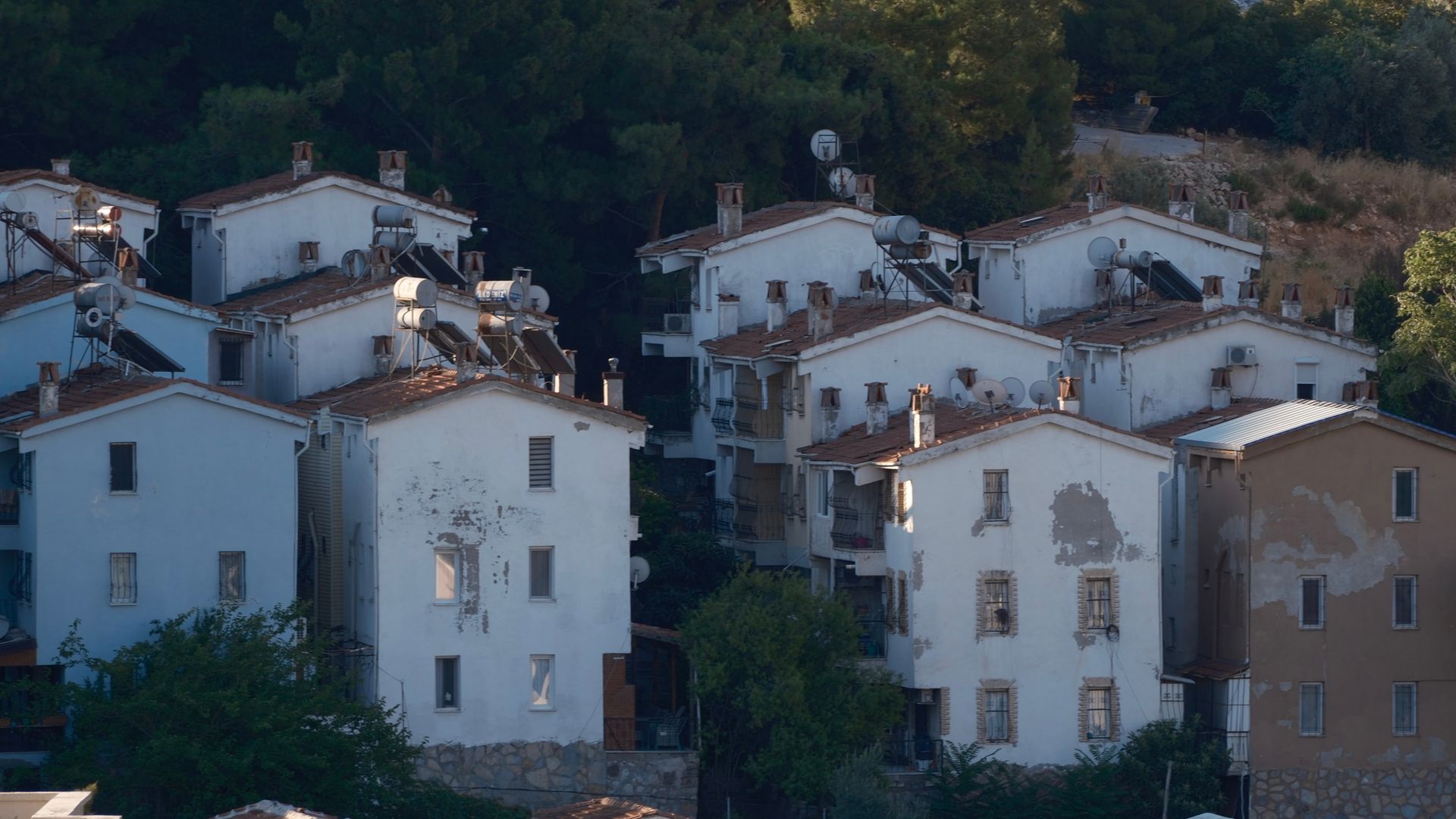
A pitched tile roof, a flat concrete roof needing ballasted or penetrating frames, and a roof already carrying solar water heating cylinders are three different jobs. Flat roofs also need tilt frames, which add material and mean more spacing between rows, so a flat roof of the same area fits fewer panels than a pitched one.
Access
Whether a van can park near the roof decides how much of the first day goes on carrying. Narrow lanes, hillside plots and blocks with no lift to the roof all add hours before a panel is fixed.
Inverter choice
A basic string inverter is the cheapest option and the right one on a clean, unshaded roof. Optimisers or microinverters — devices that let each panel perform independently — cost more and earn it back only where something shades part of the array. Paying for them on an unshaded roof is money spent; skipping them on a shaded one is the most common reason a system underperforms what was quoted.
The electrical work behind the panels
Cable run from roof to consumer unit, the state of that consumer unit, and whether an isolator and surge protection are already present. On older properties this line moves more between quotes than any other, and it is the one most likely to be missing from the cheap one.
The connection application
Export metering needs an application before the system can be energised. On some feeders that triggers a load assessment, which costs time rather than money — but it moves the date you actually start saving.
Cost by district
Sunlight barely varies across the island. Grid, roof and access vary enormously, and those decide the invoice. That range covers the whole island; the sections below are about what pulls a quote up or down inside it.
Nicosia. Inland, with the widest temperature range on the island, which matters more for inverter siting than for the panels — an inverter on a west-facing wall in Strovolos in August will throttle back on the hottest afternoons unless it is shaded or moved. Strovolos and the suburbs around it carry a large stock of 1970s to 1990s apartment blocks, where the shared roof, the riser route for the cable and the age of the consumer unit each add work, and where a management committee decision comes before any of it.
Limassol. Rapid high-rise development means roof space competes with lift overruns, water tanks and air conditioning plant, so usable area is often smaller than the roof looks from the street. In Germasogeia the grid connections are dense with tourist-area load, and export applications there more often require a load assessment before approval.
Paphos. Two separate effects. In Peyia the access roads are steep enough to limit crane and delivery vehicle size on many hillside plots, which changes how material reaches the roof. In Kato Paphos the air is salt-laden, so galvanised and marine-grade fixings are the standard specification rather than an upgrade — cheaper stainless fixings on a seafront roof are a false economy that shows up as corrosion long before the panels reach the end of their warranty. Polis Chrysochous is far enough from the Paphos contractor base that you will see travel time built into the day rate.
Larnaca. Aradippou and the newer detached housing around it give some of the simplest jobs on the island: single-family roofs, straightforward access, one consumer unit. Nearer Oroklini and the salt lake, humidity is high enough that enclosure sealing deserves a mention in the specification.
Famagusta district. In Paralimni, Ayia Napa and Protaras a high share of the building stock is seasonal tourist accommodation, and work concentrates into November to March when the properties are empty. Installer availability there follows the season rather than the weather.
What is usually excluded
Two of those deserve a sentence each. Bird mesh is left out routinely and matters here: the gap under a tilted array is exactly the space pigeons look for, and droppings on panels are both a maintenance cost and an output loss. And where an existing solar water heater occupies the best part of the roof, moving it is plumbing work a solar installer may not price at all.
How to compare quotes
Normalise everything to installed price per kWp first. That single division removes most of the apparent difference between quotes and shows you which ones are actually cheaper rather than smaller.
Match the equipment, not the headline
Panel model and quantity, inverter model, and the total kWp should all be printed. "Tier 1 panels" is not a specification. If two quotes name the same inverter and differ by a fifth, the difference is in the work, not the kit.
Ask what the yield estimate is based on
An estimate produced from a site visit with a shading assessment is worth reading. One produced from a postcode is a sales figure. Ask which you have been given.
Separate the three warranties
Product warranty on the panels, performance warranty on their output, and workmanship warranty on the installation are three different promises, often from three different parties. The one that matters most when something goes wrong is the installer's, because it is the only one you can telephone.
Check who submits the connection application
It should be the installer, and the quote should say so. If it is left to you, that is a real cost in time and a common source of delay between the panels going up and the meter changing.
Read the payment stages
A deposit, a stage on delivery of equipment, and a balance on commissioning is normal. A large deposit with the balance due before commissioning leaves you with no leverage on the one visit that proves the system works.
Our solar installation pages list installers by district with their registrations shown, and the areas section covers which companies travel to which towns. Three quotes from firms that all work in your district routinely compare better than three where one is pricing a long drive into the day rate.
Common questions
Is a bigger system always better value?
Per kWp, usually yes, because the fixed costs spread further. In total value, not necessarily — sizing beyond your daytime consumption means the surplus is exported at a lower rate than the units you would otherwise offset. Size to the load you actually use during daylight, then check what the extra kWp adds.
How much does the grant take off the price?
It is applied to the net cost after installation rather than deducted from the quote, and the amounts change between scheme rounds. The support box on this page reads the current terms from our records with the date they were checked; treat any installer who quotes a grant figure from memory with caution.
Does a battery change the arithmetic?
It changes what you do with generation rather than what generation costs. A battery lets you use in the evening what you produced at midday, which is worth the difference between the retail rate and the export rate. Whether that difference covers the battery is a separate calculation from the panel one, and it should be quoted separately.
Do I need planning permission?
A roof-mounted residential array within certain size limits generally does not, but it does need an application to the electricity authority before it can be connected and export-metered. Listed buildings and some conservation areas have additional requirements, and shared roofs on apartment blocks need the building's own consent before any of that starts.
Why is one quote far cheaper than the others?
Almost always because it covers less. In order of frequency: no scaffolding, no connection application, a smaller inverter than the array warrants, no allowance for the consumer unit, or a lower panel count than the kWp figure implies. Compare the scope line by line before you compare the totals.
How long does the whole process take?
The installation itself is usually a matter of days. What determines the total is equipment lead time, whether the feeder needs a load assessment, and the queue for the meter change afterwards. Ask each installer what they are seeing on that last step — it is the part they do not control and the part that most often surprises people.
Registered installers by district
8 companies shown here.
Limassol Electrician 24/7
Germasogeia, Limassol
Limassol Electrician 24/7 is an electrical contractor in Germasogeia, in the Limassol district. Recorded services include fault finding, consumer units, rewiring.
Vascon Solar Experts LTD
Dali, Nicosia
Vascon Solar Experts LTD is an energy supplier in Dali, in the Nicosia district.
- Solar panel installation
- Battery storage
- Solar panel maintenance
Kyriakos Louka & Yioi LTD (Office)
Strovolos, Nicosia
Kyriakos Louka & Yioi LTD (Office) is an electrical contractor in Strovolos, in the Nicosia district. Recorded services include fault finding, consumer units, rewiring.
- 1
KHALIL ABUSHALHA
Larnaca Centre, Larnaca
KHALIL ABUSHALHA is listed on the Cyprus Energy Service register of certified solar PV installers under registration ΕΦΒ/305/2024, valid to 2030-01-12. The entry covers ΛΑΡΝΑΚΑ, the larnaca district. Details come from the public register and have not been verified with the business.
- Solar panel installation
- Solar panel maintenance
- Commercial solar
MARK STUART DAVIES
Paphos Centre, Paphos
MARK STUART DAVIES is listed on the Cyprus Energy Service register of certified solar PV installers under registration ΕΦΒ/71/2020. That registration ran to 2026-02-27 and is not current in the register we hold. The entry covers ΠΑΦΟΣ, the paphos district. Details come from the public register and have not been verified with the business.
- Solar panel installation
- Solar panel maintenance
- Commercial solar
- 1
MOUSSA FAHER
Lakatamia, Nicosia
MOUSSA FAHER is listed on the Cyprus Energy Service register of certified solar PV installers under registration ΕΦΒ/424/2026, valid to 2032-03-04. The entry covers ΛΑΚΑΤΑΜΙΑ, the nicosia district. Details come from the public register and have not been verified with the business.
- Solar panel installation
- Solar panel maintenance
- Commercial solar
- 1
PATRICK MICHAEL MC CLUSKEY
Strovolos, Nicosia
PATRICK MICHAEL MC CLUSKEY is listed on the Cyprus Energy Service register of certified solar PV installers under registration ΕΦΒ/338/2024, valid to 2030-06-21. The entry covers ΣΤΡΟΒΟΛΟΣ, the nicosia district. Details come from the public register and have not been verified with the business.
- Solar panel installation
- Solar panel maintenance
- Commercial solar
STEVEN RUSH
Paralimni, Famagusta
STEVEN RUSH is listed on the Cyprus Energy Service register of certified solar PV installers under registration ΕΦΒ/64/2020. That registration ran to 2025-12-17 and is not current in the register we hold. The entry covers ΠΑΡΑΛΙΜΝΙ, the famagusta district. Details come from the public register and have not been verified with the business.
- Solar panel installation
- Solar panel maintenance
- Commercial solar
Sources
- Cyprus Energy Regulatory Authority — net metering framework — retrieved 2026-07-28
- Electricity Authority of Cyprus — connection and metering — retrieved 2026-07-28
- Ministry of Energy, Commerce and Industry — support schemes — retrieved 2026-07-28
01More on this topic
Same cluster.Different question.
 7 min read
Why Solar Panel Prices Vary So Much in Cyprus
Two quotes for the same Cypriot roof can differ by thousands. Here is what actually moves the price of a rooftop solar system, and how to read a quote.
 8 min read
Solar Panel Quotes: What Should Be in Writing
What a Cyprus solar quote must put in writing: panels, inverter, mounting, the grid application, payment stages and the variations that move the price.
Where to go next
Companies, districts and the rest of the guides on this subject.
Thinking of doing this?Get up to five quotes, free.
Send us your roof and your electricity bill and we will gather quotes from installers who work from your numbers.