Solar panel installation
How long solar panels take to pay back in Cyprus
Payback on a Cyprus solar system depends more on when you use the electricity than on how many panels you fit. Here is the arithmetic.
8 min read
Maria runs the data collection behind our solar pages. She checks installer registrations against the electrical contractor register, records quoted system prices, and tracks changes to the grant schemes as they are published.
Published · Updated
The question people actually ask is not "how many panels do I need" but "when do I get my money back". The honest answer is that two identical systems on two identical roofs can pay back years apart, and the difference is almost entirely about when the household uses electricity.
The arithmetic
Start with the installed price rather than the panel price.
| Work | Indicative range | Midpoint | Published sources |
|---|---|---|---|
| Solar panel installationTurnkey grid-tied residential rooftop PV: modules, inverter, mounting, electrical work and the EAC grid-connection application. Excludes battery storage and any government grant. Small 3 kWp systems sit at the top of the range, 10 kWp systems at the bottom, because fixed costs are spread over more capacity. | €1,100–€2,000per kWp | €1,400 |
|
Indicative range compiled from published sources, not a quote. It shows the level those sources report for this kind of work, not what your job costs. Only a site visit and a written quote for your actual scope produce a real figure. Sources compiled 2026-08-02.
Take a system at the middle of that range. How much it generates in a year turns on orientation, tilt and shading, which is why that figure has to come from your own roof rather than a national average. What the generation is worth is where households diverge:
- Electricity you consume as it is generated offsets the full retail rate.
- Electricity you export earns considerably less under net metering.
A household that is empty from eight until seven exports most of its midday generation. A household running air conditioning through the afternoon consumes it. Same panels, same roof, materially different payback.
So estimate your own position before you size anything. Look at what is running in the house between roughly ten and four on a weekday. A fridge and a standby light means you are building an export machine. Cooling, a pool pump and someone working from home means something rather better.
Two items belong on the cost side and are usually missing: panels lose a little output each year, so a payback built on first-year generation is optimistic, and the inverter is the component most likely to need replacing before the panels do.
Where the ranges land
Treat any payback figure you are given as a claim with assumptions behind it, and ask for them. Two decide the answer: what share of generation the model assumes you use directly, and what it assumes your exported units are worth.
What happens, and in what order
The payback clock starts when the meter arrangement is live, not when the panels go up. Between those two moments there can be weeks you have already paid for.
Survey with a shading assessment
Someone stands on your roof, notes what casts a shadow and when, and measures the run to your board. Without that, the quote prices an average house.
Order, lead time, installation
Lead time is the item most likely to move the completion date; ask what is in stock. The roof work itself is the visible part and usually the shortest.
Connection application and meter arrangement
Submitted in the name of a licensed electrician, and on some feeders it triggers an assessment of the local network first. Your installer does not control this step.
Commissioning
System energised, monitoring registered in your name, savings begin. Hold the last payment stage until here.
Shifting load beats adding panels
The cheapest improvement to your payback is rarely another panel. It is moving consumption into the middle of the day, and a Cypriot house usually has more of that available than the owner expects.
- Cooling. Running the air conditioning harder in the early afternoon and easing off later uses the building itself as a store. On a concrete-framed house this works better than it sounds.
- The pool pump. A large and entirely time-flexible load; moving the filtration cycle to midday is a timer setting.
- The immersion element on the solar water heater. Most houses here have one as backup, commonly left running overnight simply because that is how it was set. Moved into daylight, a cylinder you already own becomes storage you did not have to buy.
- Washing and dishwashing. Delay timers move a predictable block into generating hours and cost nothing.
What people get wrong
Sizing to the annual bill rather than the daytime load
Fitting a system to cover your total annual consumption looks efficient on paper and often is not, because the surplus you export is worth less than the units you offset. Sizing closer to your daytime baseline usually pays back faster.
Ignoring shading in the quote
A chimney that shades one panel for two hours can drag down an entire string on a basic string inverter. This is the single most common reason a system underperforms what was quoted.
Treating cleaning as optional near the coast
Salt and dust build up faster on coastal roofs. Output loss from soiling is gradual enough that people do not notice it, and large enough over a year to matter.
What the island does to the number
Heat cuts output. Modules produce less as they get hotter, which is why a June afternoon does not deliver proportionally more than a mild April one. It matters more for the inverter: in full afternoon sun it protects itself by throttling back, losing you generation at the hours you wanted most. Ask where it is going, and whether it will be shaded.
Dust settles across the whole island, not only near the sea, and months pass without rain to wash it off. Soiling accumulates here for longer than it does in northern Europe, so cleaning is a genuine running cost inside the model.
Salt attacks fixings and frames rather than generation. It decides whether the array reaches the age your payback assumed.
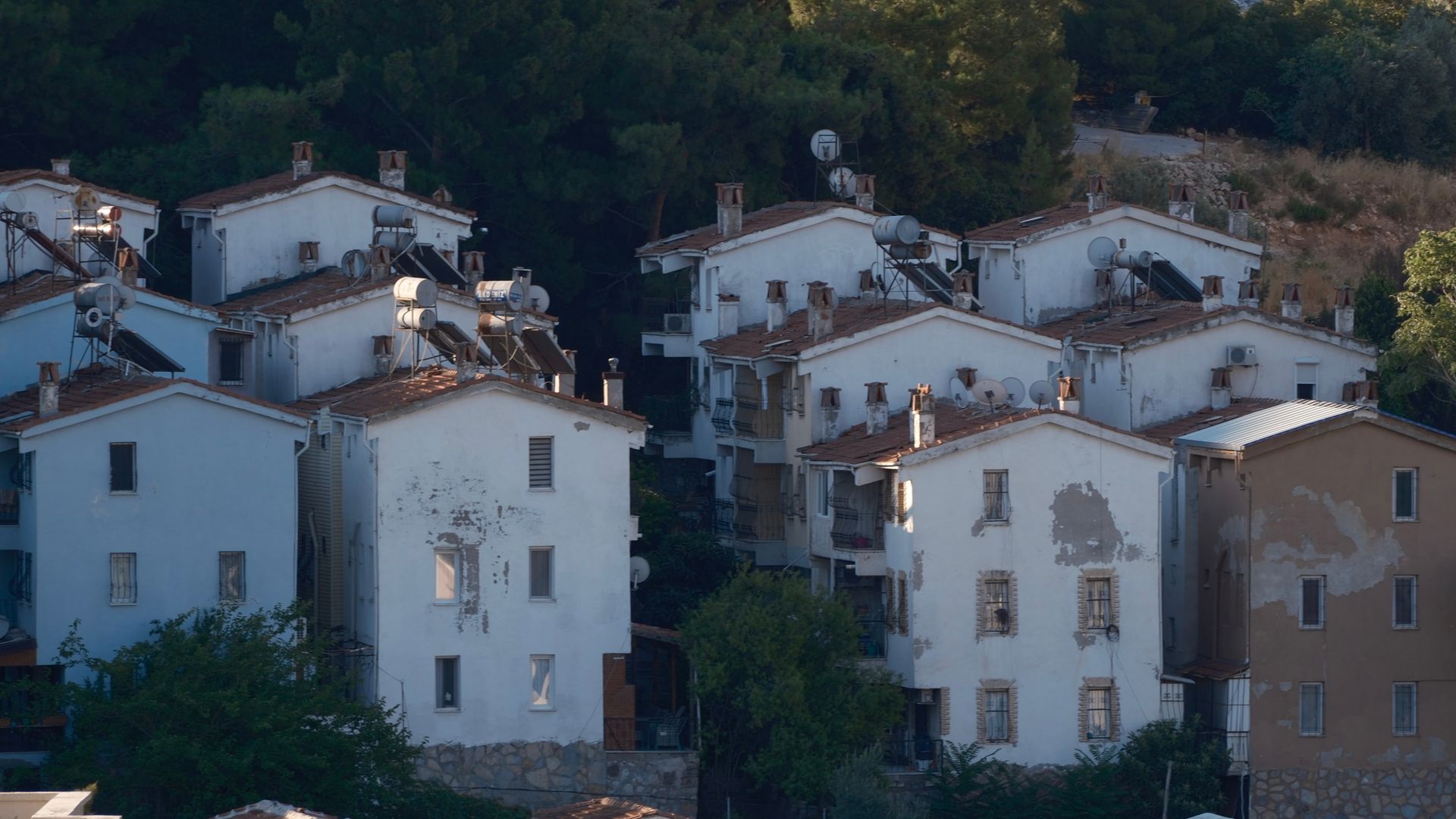
Roofs are crowded. A flat Cypriot roof usually already carries a solar water heater and its cylinder, water tanks and air conditioning plant. Usable area is smaller than it looks from the street, and those objects cast the shadows that decide whether you need optimisers.
Occupancy is seasonal in the tourist areas. An empty house exports nearly everything it makes, which is the least valuable outcome and the longest payback.
Spotting underperformance early
Nothing breaks and nothing alarms. The bill is merely less good than expected, which is easy to blame on the weather.
Own the monitoring account
Registered to your email at commissioning, not the installer's. This is the usual reason people cannot check anything a year later.
Record one clear-sky day
Peak output and daily total shortly after commissioning becomes your reference for everything afterwards, season for season.
Compare strings, not just the total
One string consistently below its neighbour on a clear day is shading, soiling or a fault, and the headline total will not show it.
Read the shape of the day
A dip at the same hour daily is a shadow. A flat top is the inverter clipping. Low all day is soiling or a module problem. An unexplained drop against the same month last year is worth a call while the workmanship warranty is live.
Questions worth asking
- What self-consumption share does the estimate assume, and where did it come from?
- Was the yield produced from a site visit, or from the address?
- Does it allow for degradation, cleaning and an inverter replacement?
- What are you seeing between commissioning and the meter going live?
- Why this inverter arrangement, given the shading you found?
- Will the monitoring account be in my name?
Works well when
A yield estimate with its assumptions attached, a layout that accounts for what is already on the roof, monitoring registered to you, and payback given as a range.
Less suitable when
A payback quoted as one number, a yield estimate with no stated basis, a grant presented as a discount already applied, and a firm promise about the connection date.
Support schemes change the answer
Grant availability moves. The figures above are read from our own records at page load, with the date they were last checked, rather than being written into this article and left to go stale.
Whether it is worth it for you
If you own the roof, are on the island most of the year, and use a meaningful share of your electricity during daylight, the arithmetic is favourable, and more favourable here than across most of Europe, because the sun is strong and the tariff it displaces is not a low one. If a property stands empty most of the year, it is not, and no installer's spreadsheet will change that.
Three cases sit in between. An apartment with a shared roof needs the building's consent before any technical question matters. A property you expect to sell soon turns on what a buyer will pay for an installed system rather than what it saves. And a long let where the tenant pays the bill produces savings for somebody who is not you.
- Do panels stop paying back once the system is paid off?
No — break-even is not the end of the benefit. The useful question is how many generating years sit between break-even and the end of the array's working life, and that is where maintenance and the inverter decide the answer.
- What happens if my consumption pattern changes?
The payback moves, sometimes a lot. Retirement, working from home, an electric vehicle or children leaving all change how much generation you use directly. If a change is coming, size for where you are heading rather than where you are.
- Does the grant shorten the payback?
Mechanically yes, by reducing the net cost — but support is normally claimed against a completed installation rather than taken off the quote, and the terms change between rounds.
Registered installers
8 companies shown here.
Limassol Electrician 24/7
Germasogeia, Limassol
Limassol Electrician 24/7 is an electrical contractor in Germasogeia, in the Limassol district. Recorded services include fault finding, consumer units, rewiring.
Vascon Solar Experts LTD
Dali, Nicosia
Vascon Solar Experts LTD is an energy supplier in Dali, in the Nicosia district.
- Solar panel installation
- Battery storage
- Solar panel maintenance
Kyriakos Louka & Yioi LTD (Office)
Strovolos, Nicosia
Kyriakos Louka & Yioi LTD (Office) is an electrical contractor in Strovolos, in the Nicosia district. Recorded services include fault finding, consumer units, rewiring.
- 1
KHALIL ABUSHALHA
Larnaca Centre, Larnaca
KHALIL ABUSHALHA is listed on the Cyprus Energy Service register of certified solar PV installers under registration ΕΦΒ/305/2024, valid to 2030-01-12. The entry covers ΛΑΡΝΑΚΑ, the larnaca district. Details come from the public register and have not been verified with the business.
- Solar panel installation
- Solar panel maintenance
- Commercial solar
MARK STUART DAVIES
Paphos Centre, Paphos
MARK STUART DAVIES is listed on the Cyprus Energy Service register of certified solar PV installers under registration ΕΦΒ/71/2020. That registration ran to 2026-02-27 and is not current in the register we hold. The entry covers ΠΑΦΟΣ, the paphos district. Details come from the public register and have not been verified with the business.
- Solar panel installation
- Solar panel maintenance
- Commercial solar
- 1
MOUSSA FAHER
Lakatamia, Nicosia
MOUSSA FAHER is listed on the Cyprus Energy Service register of certified solar PV installers under registration ΕΦΒ/424/2026, valid to 2032-03-04. The entry covers ΛΑΚΑΤΑΜΙΑ, the nicosia district. Details come from the public register and have not been verified with the business.
- Solar panel installation
- Solar panel maintenance
- Commercial solar
- 1
PATRICK MICHAEL MC CLUSKEY
Strovolos, Nicosia
PATRICK MICHAEL MC CLUSKEY is listed on the Cyprus Energy Service register of certified solar PV installers under registration ΕΦΒ/338/2024, valid to 2030-06-21. The entry covers ΣΤΡΟΒΟΛΟΣ, the nicosia district. Details come from the public register and have not been verified with the business.
- Solar panel installation
- Solar panel maintenance
- Commercial solar
STEVEN RUSH
Paralimni, Famagusta
STEVEN RUSH is listed on the Cyprus Energy Service register of certified solar PV installers under registration ΕΦΒ/64/2020. That registration ran to 2025-12-17 and is not current in the register we hold. The entry covers ΠΑΡΑΛΙΜΝΙ, the famagusta district. Details come from the public register and have not been verified with the business.
- Solar panel installation
- Solar panel maintenance
- Commercial solar
Sources
- Cyprus Energy Regulatory Authority — net metering framework — retrieved 2026-07-10
- Ministry of Energy, Commerce and Industry — support schemes — retrieved 2026-07-10
Where to go next
Companies, districts and the rest of the guides on this subject.
Thinking of doing this?Get up to five quotes, free.
Send us your roof and your electricity bill and we will gather quotes from installers who work from your numbers.