Solar panel maintenance
Solar panel cleaning in Paphos — what it costs and who does it
What solar panel cleaning costs in the Paphos district, how salt exposure and roof access change the price, and what to check before you accept a quote.
7 min read

Maria runs the data collection behind our solar pages. She checks installer registrations against the electrical contractor register, records quoted system prices, and tracks changes to the grant schemes as they are published.
Published
Panel cleaning in Paphos is quoted three ways — per panel, per visit with a minimum charge, or as an annual contract covering two visits — and the first thing to establish is which basis you are being offered, because a per-panel rate and a per-visit rate are not comparable. After that, two local things decide your price: whether the property is on the salt-exposed coastal strip, and whether a van with a water tank can actually get near the roof.
The Paphos market
Cleaning is bought differently here than inland, and the reason is who owns the roofs. Paphos carries an unusually high share of part-year and non-resident ownership, so much of the work is booked by people who are not on the island, often through a management company, and paid for without anyone seeing the result. That produces the most common complaint in this trade: a bill for a visit nobody can verify happened.
The fix is procedural. Ask for dated photographs of every roof plane before and after, and for the generation figures either side of the visit. Companies working properly with absent owners already do this — it is how they get paid without argument.
The second feature is the mix of properties. The coastal strip from Kato Paphos through Chloraka and Kissonerga is mostly low-rise villas and small blocks with flat concrete roofs and parapets — the straightforward end of the work. Behind it, the hillside villages run to split-level houses on steep plots where access, not panel count, sets the price. Know which one you are before you ring anyone, and know your panel count: it is on your installation paperwork or countable from the ground, and every quote gets more accurate the moment you can say the number.
What it costs here versus the national range
| Work | Indicative range | Midpoint | Published sources |
|---|---|---|---|
| Solar panel maintenanceOne professional cleaning visit to a residential rooftop array under normal roof access; the spread is driven by system size. Cyprus guidance is 2-4 visits per year because of dust, pollen and salt air. A periodic technical inspection is quoted separately at EUR 100-200 every 2-3 years. | €50–€150per cleaning visit | €100 |
Indicative range compiled from published sources, not a quote. It shows the level those sources report for this kind of work, not what your job costs. Only a site visit and a written quote for your actual scope produce a real figure. Sources compiled 2026-08-02.
Both tables are pulled from the price index at page load rather than typed into this article, so they do not go stale.
Paphos sits close to the national picture on rate and differs on the things around it. The district is long, so the outlying parts carry real driving time; access on the hillside plots decides method; and a coastal roof takes longer than an inland one of the same size, because salt film does not lift the way dust does.
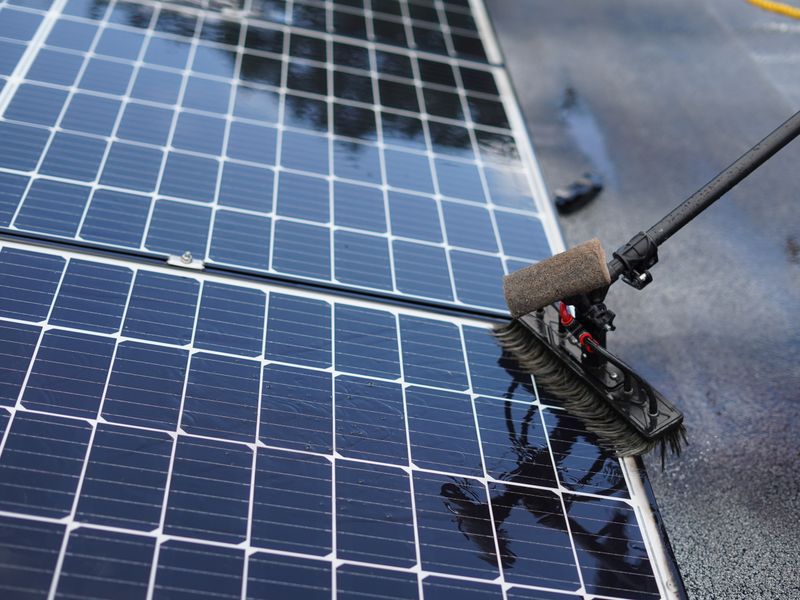
A visit at the middle of the range should cover the glass on every panel, worked with purified or deionised water and a soft brush, plus a visual check of frames, clamps and cable runs. Ask what the price does not include: bird proofing, nest removal, roof safety equipment where the pitch demands it, and a second visit if the array turns out to be split across planes that were not quoted.
Water matters more than people expect. Cyprus mains water is hard; wash a panel with it, let it dry in this sun, and you get mineral spotting — the thing you paid to remove. A price well below the others is often one where the answer to "what water do you use" is "yours".
Local conditions that change the job
Salt. Kato Paphos and the strip either side of it are directly exposed to salt-laden air. Salt film bonds harder than dust, needs dwell time and more water, and returns faster — which is why coastal properties tend to end up on the two-visit arrangement while inland ones manage with less. The same exposure is why marine-grade fixings are standard here, so a cleaner on a coastal roof should be checking clamps and frames for corrosion while up there.
Access. In Peyia and the hillside plots above it, steep access roads limit the size of vehicle that can reach the property at all. A tank-carrying van that cannot park within hose reach changes the method entirely. Say where you are on the hill when you first ring, because a company that arrives and cannot work still charges for the visit.
Distance. Around Polis Chrysochous and the northern villages, travel time from the contractor base in Paphos is a meaningful share of a small job. Cluster the bookings: agree a date with two or three neighbours and the per-property cost falls for all of you.
Roof type. Flat concrete with a parapet is the easy case. Pitched tile roofs, more common inland, need either a pole worked from the ground or proper edge protection and anchors — never someone walking on the panels, which is how micro-cracks get into cells that fail years later.
Timing. Spring brings dust carried in on southerly weather that settles across the whole island, so a clean booked just before it arrives is wasted. And the glass gets hot: work starts early, partly for the person doing it and partly because cold water on very hot glass is avoidable stress.
Companies covering the district
Solar maintenance companies covering the Paphos district
8 companies shown here.
MARK STUART DAVIES
Paphos Centre, Paphos
MARK STUART DAVIES is listed on the Cyprus Energy Service register of certified solar PV installers under registration ΕΦΒ/71/2020. That registration ran to 2026-02-27 and is not current in the register we hold. The entry covers ΠΑΦΟΣ, the paphos district. Details come from the public register and have not been verified with the business.
- Solar panel installation
- Solar panel maintenance
- Commercial solar
- 1
ΑΛΕΞΑΝΔΡΟΣ ΜΙΧΑΗΛ
Emba, Paphos
ΑΛΕΞΑΝΔΡΟΣ ΜΙΧΑΗΛ is listed on the Cyprus Energy Service register of certified solar PV installers under registration ΕΦΒ/432/2026, valid to 2032-03-04. The entry covers ΕΜΠΑ, the paphos district. Details come from the public register and have not been verified with the business.
- Solar panel installation
- Solar panel maintenance
- Commercial solar
ΑΛΕΞΗΣ ΗΡΟΔΟΤΟΥ
Paphos Centre, Paphos
ΑΛΕΞΗΣ ΗΡΟΔΟΤΟΥ is listed on the Cyprus Energy Service register of certified solar PV installers under registration ΕΦΒ/09/2018. That registration ran to 2024-07-25 and is not current in the register we hold. The entry covers ΠΑΦΟΣ, the paphos district. Details come from the public register and have not been verified with the business.
- Solar panel installation
- Solar panel maintenance
- Commercial solar
ΑΝΔΡΕΑΣ ΔΗΜΗΤΡΙΟΥ
Paphos Centre, Paphos
ΑΝΔΡΕΑΣ ΔΗΜΗΤΡΙΟΥ is listed on the Cyprus Energy Service register of certified solar PV installers under registration ΕΦΒ/88/2020. That registration ran to 2026-07-08 and is not current in the register we hold. The entry covers ΠΑΦΟΣ, the paphos district. Details come from the public register and have not been verified with the business.
- Solar panel installation
- Solar panel maintenance
- Commercial solar
- 1
ΑΝΔΡΕΑΣ ΔΙΟΓΕΝΟΥΣ
Pomos, Paphos
ΑΝΔΡΕΑΣ ΔΙΟΓΕΝΟΥΣ is listed on the Cyprus Energy Service register of certified solar PV installers under registration ΕΦΒ/93/2020, valid to 2026-09-22. The entry covers ΠΩΜΟΣ, the paphos district. Details come from the public register and have not been verified with the business.
- Solar panel installation
- Solar panel maintenance
- Commercial solar
- 1
ΑΝΤΩΝΗΣ ΔΙΟΓΕΝΟΥΣ
Nea Dhimmata, Paphos
ΑΝΤΩΝΗΣ ΔΙΟΓΕΝΟΥΣ is listed on the Cyprus Energy Service register of certified solar PV installers under registration ΕΦΒ/367/2024, valid to 2030-12-03. The entry covers ΝΕΑ ΔΗΜΜΑΤΑ, the paphos district. Details come from the public register and have not been verified with the business.
- Solar panel installation
- Solar panel maintenance
- Commercial solar
- 1
ΑΝΤΩΝΗΣ ΚΥΡΙΑΚΟΥ
Paphos Centre, Paphos
ΑΝΤΩΝΗΣ ΚΥΡΙΑΚΟΥ is listed on the Cyprus Energy Service register of certified solar PV installers under registration ΕΦΒ/128/2021, valid to 2027-09-14. The entry covers ΠΑΦΟΣ, the paphos district. Details come from the public register and have not been verified with the business.
- Solar panel installation
- Solar panel maintenance
- Commercial solar
- 1
ΑΡΙΣΤΟΣ ΚΑΡΜΙΩΤΗΣ
Anarita, Paphos
ΑΡΙΣΤΟΣ ΚΑΡΜΙΩΤΗΣ is listed on the Cyprus Energy Service register of certified solar PV installers under registration ΕΦΒ/428/2026, valid to 2032-03-04. The entry covers ΑΝΑΡΙΤΑ, the paphos district. Details come from the public register and have not been verified with the business.
- Solar panel installation
- Solar panel maintenance
- Commercial solar
These are companies whose registration we have checked, in no particular order of merit. We hold no ratings, testimonials or reviews, so treat it as a starting set rather than a ranking. The areas section covers the rest of the district.
Get four things in writing before you accept: the basis of the price — per panel, per visit or contract, and the minimum charge; the water and method, including whether any pressurised equipment stays inside the panel manufacturer's stated limits; what is checked besides the glass; and what evidence you receive — dated photographs, plus generation figures if you are not there.
Town by town
Paphos and Kato Paphos. Dense and easy to reach, with the strongest coastal exposure in Kato Paphos. On apartment blocks the roof is common property, so access runs through the building's arrangements rather than yours alone.
Chloraka and Kissonerga. Coastal and low-rise, mostly flat roofs with good parking. Straightforward work, and the properties most likely to be empty part of the year — so agree the evidence trail up front.
Peyia. The access case: steep lanes, split-level houses and arrays often on more than one plane. Ask whether the quote covers all planes or just the main one.
Tala, Emba and Tsada. Inland and higher, so less salt and more dust, with pitched tile roofs more common. Method is the question here, not exposure.
Polis Chrysochous and the northern villages. Travel dominates a small job. Cluster bookings with neighbours, and ask whether the company already has work up there that week.
Common questions
How often should panels be cleaned in Paphos?
More often on the coast than inland, which is why the two-visit contract is the usual coastal shape. Rather than guess, watch your own generation figures across a year: soiling loss is gradual enough that nobody notices it by eye, and the inverter data is what tells you when the last clean stopped paying for itself.
Can I just do it myself with a hose?
You can rinse loose dust, and on a safely accessible flat roof that is reasonable enough. Two cautions: hard mains water dries to mineral spotting, and nobody should be walking on glass or working at a roof edge without protection. Salt film and baked-on fouling do not come off with a hose.
The property is empty most of the year. How do I know the work happened?
Book on a basis that produces evidence — dated photographs of each roof plane before and after, and the generation reading either side. A company that will not do that is not equipped for the way this district works.
Is a pressure washer acceptable?
Only within the panel manufacturer's stated pressure limit, and there is rarely reason to go near it. Purified or deionised water with a soft brush removes what is actually on Cypriot glass without risking the seals around the frame.
Does cleaning count as maintenance?
Partly. A cleaning visit puts someone on the roof looking at clamps, frames and cable runs, which is useful, but it tests nothing. Treat it as the visual half of looking after a system, with the electrical half done separately.
Sources
- Electricity Authority of Cyprus — domestic supply and metering — retrieved 2026-07-28
- Cyprus Energy Regulatory Authority — net metering framework — retrieved 2026-07-28
- Cyprus Scientific and Technical Chamber (ETEK) — register of professionals — retrieved 2026-07-28
01More on this topic
Same cluster.Different question.
 8 min read
How to Choose a Solar Panel Cleaning Company in Cyprus
What can actually be checked about a solar panel cleaning company in Cyprus, what to ask before booking, and what belongs in a written cleaning quote.
 7 min read
Solar Panel Cleaning in Nicosia: Costs and Local Companies
What solar panel cleaning costs in Nicosia, how dust, roof access and block ownership move the price, and what to check before you accept a quote.
- 7 min read
Solar Panel Cleaning in Limassol: Costs and Local Companies
What solar panel cleaning is priced on in the Limassol district, what salt and high-rise access do to a quote, and how to compare two prices properly.
- 6 min read
Solar Panel Cleaning in Larnaca: Costs and Local Companies
What a solar panel cleaning installation in Larnaca, Cyprus involves, the published cost level, and the grid and grant details that shape it.
- 7 min read
Solar Panel Cleaning in Famagusta: Costs and Local Companies
What a solar panel cleaning installation in Famagusta, Cyprus involves, the published cost level, and the grid and grant details that shape it.
Where to go next
Companies, districts and the rest of the guides on this subject.
Thinking of doing this?Get up to five quotes, free.
Send us your roof and your electricity bill and we will gather quotes from installers who work from your numbers.