Solar panel maintenance
Solar panel cleaning and maintenance in Cyprus
What panels in Cyprus actually need, how dust and salt set the cleaning interval, what you can safely do yourself and what has to go to an electrician.
7 min read

Maria runs the data collection behind our solar pages. She checks installer registrations against the electrical contractor register, records quoted system prices, and tracks changes to the grant schemes as they are published.
Published
Panels in Cyprus need washing more often than the manufacturer's manual assumes, because that manual was written for a climate where it rains in July. Everything else — inverter, connectors, the clamps holding the array down — needs looking at once a year, and the checking matters more than the washing. Dirty glass costs a few per cent. A corroded connector or an inverter running hot costs a whole string.
Why the climate matters here
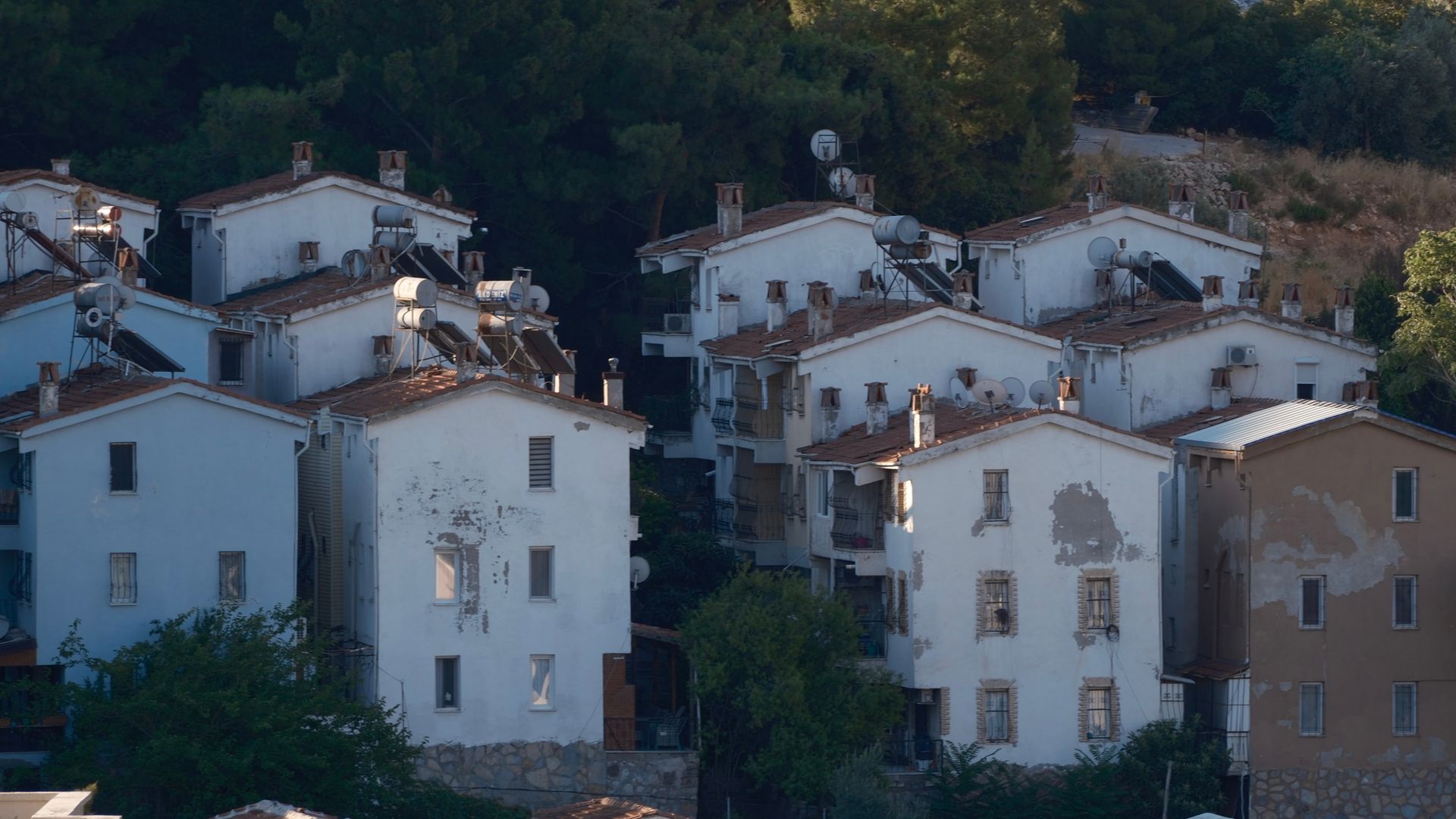
Nothing washes the glass for you between roughly May and October, so whatever lands on the panels in spring is still there in August, baked on rather than sitting loose.
Dust arriving on southerly winds in spring settles as an even film. Even is the problem: it trips no alarm in your monitoring app and shaves output off every panel at once, so week-to-week comparison shows nothing.
Salt affects anywhere with direct coastal exposure — Kato Paphos is the standard case, along with the Limassol seafront, Oroklini near the salt lake and Protaras. It is why galvanised and marine-grade fixings are normal on those roofs. Salt film is stickier than dust and a plain rinse does not always shift it; salt on rails and clamps is the slower, costlier problem.
Droppings and leaf debris are the opposite: opaque and local. One dropping over one cell can put a substring into bypass, and on a basic string inverter that loss spreads well beyond the panel you can see.
Heat is the fourth factor and has nothing to do with glass. Inverters derate — deliberately cut output to protect themselves — when they get hot, and they do it in the early afternoon, exactly when the array should peak. Inland sites carry the widest temperature range on the island, so a Nicosia inverter in an unventilated store room is working outside what its datasheet assumed.
The maintenance schedule
Several clocks run on a domestic system, so stop treating maintenance as one job.
The glass — twice a year, timed to weather not calendar
Wash once the spring dust has finished, so you enter the highest-output months clean, and again at the end of summer before the first proper autumn rain, so the rain lands on a surface it can clear instead of turning dust to mud. Coastal roofs, roofs beside unsurfaced roads and roofs under trees need more.
The electrical side — annually
Isolators, connectors, cable runs, earthing and the inverter's fault log. The visit that finds problems while they are still cheap, and the one people skip because nothing appears to be wrong.
The roof interface — annually, with the roof
Mounting feet, penetrations, seals and clamp torque, done before the autumn rain rather than after a damp patch appears on a bedroom ceiling.
Monitoring — monthly, from your armchair
Compare this month with the same month last year, never with last month. Seasonal variation swamps everything else: month-on-month tells you nothing, year-on-year tells you almost everything.
What you can do yourself
Washing an accessible flat roof is a homeowner job. Most of the rules are about not making things worse.
- Early morning or after sunset. Cold water on hot glass risks thermal shock, and Cypriot roof glass in July is far hotter than the air. It is also when the array produces least, so you lose nothing.
- Soft water, soft brush, nothing else. Detergent leaves a film that attracts the next dust; pressure forces water past the frame seal. Hard mains water dries to mineral spotting, so squeegee it off rather than let it evaporate in place.
- Never stand on a panel. Microcracks in cells do not show and do not heal. Work with a pole from the roof surface.
- Keep the inverter breathing. Clear the vents and whatever storage has accumulated around it, and read the status light while you are there.
- Remove the cause. Cutting the branch back is permanent; washing its shadow off twice a year is not.
Access decides the rest. A flat roof with a parapet is one thing. A pitched tile roof, a third-floor block, or a hillside plot in Peyia where the access road already limits what can reach the house is another — and no place for a ladder and optimism.
What needs a professional
The line: anything electrical, anything diagnostic, anything awkward at height.
An array is live whenever daylight is on it. No switch makes the DC side safe, only isolators that section it, and DC faults behave differently from the AC ones a general handyman knows. Electrical work should go to someone licensed for it, and that registration is a document you can ask to see rather than a claim to accept.
Call someone when:
- Output dropped and washing did not fix it. String testing and thermal imaging find a failed bypass diode, a hot cell or a corroded connector in an afternoon. Guessing finds them in about a year.
- The inverter is logging faults. Fitting a replacement of a different rating changes the system as it was registered — the connection and export-metering application made to the electricity authority typically runs around 45 days, and that is not a thing to discover after the old unit is out.
- There is corrosion on rails, clamps or earthing. Common on coastal roofs, and structural rather than cosmetic.
- Scaffolding, a pitched roof or a block's common roof is involved. On a block the roof belongs to everyone, which makes access a committee question before a technical one.
We list solar maintenance companies by district across all five districts, and the service pages separate those doing electrical testing from those washing only — they are quoted as different jobs and often by different companies.
Cost of neglect
Put the asset in proportion. Installed prices run in a known range per kilowatt-peak — kWp, the array's rated output in full sun — and a common domestic system is around 5 kWp.
| Work | Indicative range | Midpoint | Published sources |
|---|---|---|---|
| Solar panel installationTurnkey grid-tied residential rooftop PV: modules, inverter, mounting, electrical work and the EAC grid-connection application. Excludes battery storage and any government grant. Small 3 kWp systems sit at the top of the range, 10 kWp systems at the bottom, because fixed costs are spread over more capacity. | €1,100–€2,000per kWp | €1,400 |
|
Indicative range compiled from published sources, not a quote. It shows the level those sources report for this kind of work, not what your job costs. Only a site visit and a written quote for your actual scope produce a real figure. Sources compiled 2026-08-02.
A 5 kWp array here generates roughly 7,500 to 8,500 kWh a year depending on orientation and shading. That is what you are protecting, and neglect is expensive because it is silent. A failed bypass diode switches nothing off; it turns one panel into a resistor. A blocked inverter does not alarm; it derates at one in the afternoon and you never see the hour it should have had.
What sets the price of a visit is roof access first, panel count second, and whether an electrical test is included at all. Travel is real money here — a Paphos company quoting for Polis Chrysochous prices in the drive, and it shows up as a higher day rate. We publish no range for cleaning and maintenance visits the way we do for installation, so treat a single quoted figure as a starting point and compare on what the visit actually includes: washing only, or washing plus an electrical inspection with a written result.
Common questions
How often should solar panels be cleaned in Cyprus?
Twice a year suits most inland roofs: once after the spring dust passes, once before the first autumn rain. Coastal roofs, roofs beside unsurfaced roads and roofs where birds roost need more. Your own year-on-year monitoring data is a better signal than the calendar.
Can I clean the panels myself?
If the roof is flat, accessible and has a parapet, yes — soft water, soft brush, early morning or after sunset, never standing on the glass. If reaching the panels means a ladder against a pitched roof, the cost of a professional clean is not what you should be weighing.
Does the rain not clean them?
Partly, and only when it arrives — which in Cyprus is after the output has already been lost. Light rain on a dusty panel is worse than none: it leaves streaked deposits instead of washing them away.
Is there emergency solar panel repair in Cyprus?
Some companies offer same-week call-out for a dead inverter, tripping isolators or storm damage to mountings. Treat visible damage, burning smells and repeated tripping as urgent and isolate the AC side. A gradual output drop is a booked visit, not an emergency — it is almost never something that changed overnight.
Does cleaning affect the warranty?
Cleaning properly does not. Pressure washing, abrasives, walking on panels and unqualified work on the DC side can all give a manufacturer grounds to decline a claim. Keep dated invoices — warranties carry conditions about upkeep, and a claim goes better with records than with a recollection.
Solar maintenance companies by district
8 companies shown here.
Limassol Electrician 24/7
Germasogeia, Limassol
Limassol Electrician 24/7 is an electrical contractor in Germasogeia, in the Limassol district. Recorded services include fault finding, consumer units, rewiring.
Vascon Solar Experts LTD
Dali, Nicosia
Vascon Solar Experts LTD is an energy supplier in Dali, in the Nicosia district.
- Solar panel installation
- Battery storage
- Solar panel maintenance
Kyriakos Louka & Yioi LTD (Office)
Strovolos, Nicosia
Kyriakos Louka & Yioi LTD (Office) is an electrical contractor in Strovolos, in the Nicosia district. Recorded services include fault finding, consumer units, rewiring.
- 1
KHALIL ABUSHALHA
Larnaca Centre, Larnaca
KHALIL ABUSHALHA is listed on the Cyprus Energy Service register of certified solar PV installers under registration ΕΦΒ/305/2024, valid to 2030-01-12. The entry covers ΛΑΡΝΑΚΑ, the larnaca district. Details come from the public register and have not been verified with the business.
- Solar panel installation
- Solar panel maintenance
- Commercial solar
MARK STUART DAVIES
Paphos Centre, Paphos
MARK STUART DAVIES is listed on the Cyprus Energy Service register of certified solar PV installers under registration ΕΦΒ/71/2020. That registration ran to 2026-02-27 and is not current in the register we hold. The entry covers ΠΑΦΟΣ, the paphos district. Details come from the public register and have not been verified with the business.
- Solar panel installation
- Solar panel maintenance
- Commercial solar
- 1
MOUSSA FAHER
Lakatamia, Nicosia
MOUSSA FAHER is listed on the Cyprus Energy Service register of certified solar PV installers under registration ΕΦΒ/424/2026, valid to 2032-03-04. The entry covers ΛΑΚΑΤΑΜΙΑ, the nicosia district. Details come from the public register and have not been verified with the business.
- Solar panel installation
- Solar panel maintenance
- Commercial solar
- 1
PATRICK MICHAEL MC CLUSKEY
Strovolos, Nicosia
PATRICK MICHAEL MC CLUSKEY is listed on the Cyprus Energy Service register of certified solar PV installers under registration ΕΦΒ/338/2024, valid to 2030-06-21. The entry covers ΣΤΡΟΒΟΛΟΣ, the nicosia district. Details come from the public register and have not been verified with the business.
- Solar panel installation
- Solar panel maintenance
- Commercial solar
STEVEN RUSH
Paralimni, Famagusta
STEVEN RUSH is listed on the Cyprus Energy Service register of certified solar PV installers under registration ΕΦΒ/64/2020. That registration ran to 2025-12-17 and is not current in the register we hold. The entry covers ΠΑΡΑΛΙΜΝΙ, the famagusta district. Details come from the public register and have not been verified with the business.
- Solar panel installation
- Solar panel maintenance
- Commercial solar
Sources
- Electricity Authority of Cyprus — connection and metering — retrieved 2026-07-24
- Cyprus Scientific and Technical Chamber (ETEK) — register of professionals — retrieved 2026-07-24
01More on this topic
Same cluster.Different question.
 7 min read
Panel Cleaning in Cyprus: The Questions People Actually Ask
How often solar panels really need cleaning in Cyprus, what moves the price of the visit, and why the summer here makes soiling worse than it looks.
 7 min read
What Solar Panel Cleaning Actually Involves in Cyprus
What a solar panel cleaning visit covers in Cyprus, what pushes the price up, how often the island's dust and salt make it worth doing, and what to check.
 7 min read
Panel Cleaning for Cyprus Holiday Rentals and Second Homes
What solar panel cleaning costs on a Cyprus holiday let, when dust and salt actually cost you generation, and how to schedule it around changeover days.
Where to go next
Companies, districts and the rest of the guides on this subject.
Thinking of doing this?Get up to five quotes, free.
Send us your roof and your electricity bill and we will gather quotes from installers who work from your numbers.