Solar panel installation
Solar panels, solar water heating or a heat pump: comparing the options in Cyprus
PV, solar water heating and heat pumps do different jobs on a Cypriot roof. How the options compare, and which one suits which property.
7 min read

Maria runs the data collection behind our solar pages. She checks installer registrations against the electrical contractor register, records quoted system prices, and tracks changes to the grant schemes as they are published.
Published
Four things compete for the same money and the same square metres of Cypriot roof: a photovoltaic (PV) system that makes electricity, a solar water heater that makes hot water directly from the sun, a heat pump that makes hot water using electricity, and simply carrying on buying every unit from the grid. They are not really alternatives. PV and solar water heating do different jobs, and in most Cypriot houses the sensible order is solar water heating first because it is the smallest capital outlay and you use nearly all of its output yourself, then PV sized to your daytime consumption, and a heat pump only if you have a genuine winter hot-water shortfall the sun cannot cover.
If you want the short version: work out what you spend on electricity between nine in the morning and five in the afternoon. That figure, not your annual bill, decides whether PV is worth it on your roof.
The options
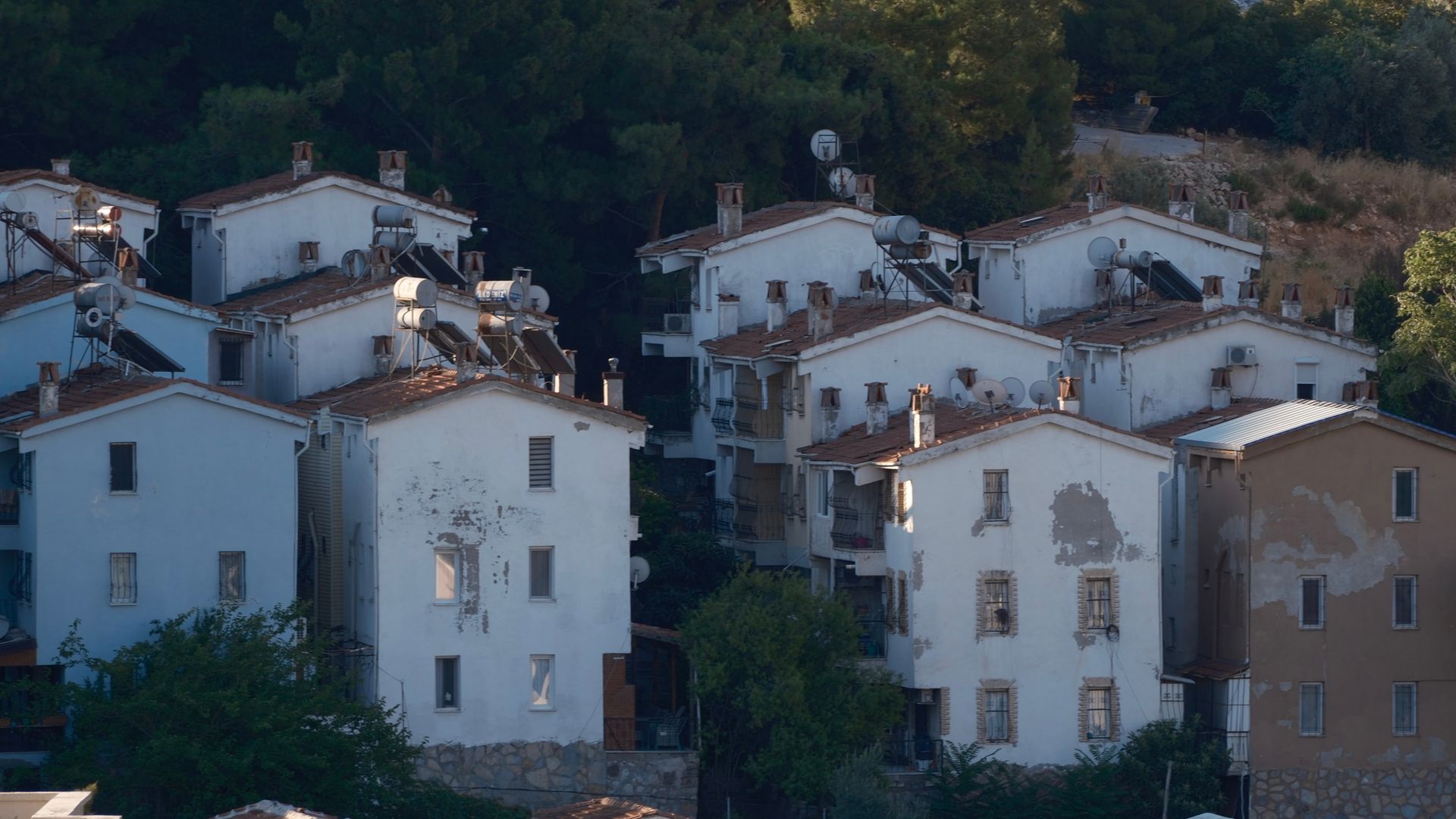
Solar water heating (solar thermal). A flat-plate collector and an insulated cylinder, almost always mounted together on the roof. It heats water and does nothing else. In Cyprus it will carry a household through most of the year without touching the electric immersion element; how much of the year depends on cylinder capacity against household size, on orientation, and on how much hot water gets drawn after dark, and the shortfall concentrates in the shortest, coolest weeks. It is the system already sitting on a large share of the island's older housing stock. Nothing about it involves the grid, so there is no application, no meter change and no export arithmetic.
Photovoltaic panels (PV). Panels that make electricity, an inverter that converts it to mains alternating current, and a connection arrangement with the Electricity Authority of Cyprus. Capacity is measured in kWp — kilowatt-peak, the output under standard test conditions rather than what you will see on a July afternoon. Residential systems typically fall between 3 and 10 kWp.
A heat pump. An electrically driven unit that moves heat rather than generating it, producing hot water at a fraction of the electricity an immersion heater would use. It runs on grid units unless you pair it with PV, at which point it becomes one of the better ways to consume your own daytime generation instead of exporting it.
Grid electricity alone. The baseline, and the honest comparison for a property that is empty most of the year. No capital outlay, no maintenance, full exposure to whatever the tariff does next.
Side-by-side comparison
| Solar water heating | PV | Heat pump | Grid only | |
|---|---|---|---|---|
| What it produces | Hot water | Electricity | Hot water | Nothing |
| Roof area needed | Small — one collector and cylinder | The largest of the three | None on the roof | None |
| Grid paperwork | None | Connection and metering arrangement with EAC | None | None |
| Output you use yourself | Almost all of it | Only the part you consume as it is generated | All of it | n/a |
| What decides the price | Cylinder capacity, collector count, roof access | System size in kWp, inverter type, mounting and access | Unit capacity and where the cylinder goes | n/a |
| First thing to fail | Cylinder element and anode | Inverter, well before the panels | Compressor | n/a |
| Suits an empty house | Yes, it just sits there | Poorly — the generation is exported | Only if occupied | Yes |
The installed price ranges are worth reading before anything else, because they are what the ten-year arithmetic is built on.
| Work | Indicative range | Midpoint | Published sources |
|---|---|---|---|
| Solar water heatingComplete domestic solar water heater (storage tank plus collectors) as sold in Cyprus. Low and median reflect retail equipment prices for 160-200 L double- and triple-energy units; the high figure is a 300 L pressurised system with two 2.5 m2 collectors, support stand and installation kit. Fitting labour is not separately evidenced in these sources and may be additional. | €1,000–€2,500per system | €1,300 |
Indicative range compiled from published sources, not a quote. It shows the level those sources report for this kind of work, not what your job costs. Only a site visit and a written quote for your actual scope produce a real figure. Sources compiled 2026-08-02.
| Work | Indicative range | Midpoint | Published sources |
|---|---|---|---|
| Solar panel installationTurnkey grid-tied residential rooftop PV: modules, inverter, mounting, electrical work and the EAC grid-connection application. Excludes battery storage and any government grant. Small 3 kWp systems sit at the top of the range, 10 kWp systems at the bottom, because fixed costs are spread over more capacity. | €1,100–€2,000per kWp | €1,400 |
|
Indicative range compiled from published sources, not a quote. It shows the level those sources report for this kind of work, not what your job costs. Only a site visit and a written quote for your actual scope produce a real figure. Sources compiled 2026-08-02.
PV sits at roughly €900–1,300 per installed kWp. A Cypriot roof returns about 1,500 to 1,700 kWh per installed kWp each year, varying with orientation, tilt and shading. What that generation is worth is where households separate: electricity you consume as it is generated offsets the full retail rate, while electricity you export earns considerably less under the net metering framework. That asymmetry, not irradiance, is the whole game.
Which suits which property
Works well when
A permanently occupied family house with its own roof, an afternoon cooling load and someone at home during the day. This is the case where PV and solar water heating both make sense, and where adding a heat pump later gives your midday surplus somewhere useful to go.
Less suitable when
A holiday property in Ayia Napa or Protaras, occupied for a few weeks a year. Solar water heating still earns its keep because it needs no occupancy to be useful, but PV exports almost everything it makes. These are also areas where the trades work to a November-to-March window around the season, so scheduling is a separate constraint from cost.
Apartments. Strovolos and much of inland Nicosia is 1970s–1990s apartment blocks, where the roof is common property. Solar water heating is often already installed per flat. PV usually is not viable without a management committee decision, and that is a governance problem rather than a technical one.
Coastal Limassol and Germasogeia. Dense tourist-area grid connections mean solar export applications frequently require a load assessment before approval, which adds time to the process rather than cost to the quote. Ask any installer quoting you here whether they have checked the local connection capacity, and ask before you pay a deposit.
Hillside plots. In Peyia and similar hillside villages, steep access roads limit the size of crane and delivery vehicle that can reach many plots at all, so access decides the mounting method and the delivery arrangement, and both show up in the labour line of a PV quote. A solar water heater is one lift; a PV array is a day of carrying.
Inland houses. Nicosia has the widest temperature swing on the island. That raises both the summer cooling load, which favours PV because the demand coincides with generation, and the winter hot-water demand, which is where solar thermal alone starts to need help and a heat pump becomes worth pricing.
Cost over ten years
There is no single ten-year figure, but there is a reliable way to build one. Five lines, in this order.
Capital cost, after the grant
Take the installed price from the tables above for the size you actually need, then subtract whatever the current support scheme pays. Grants move, so read the live figure rather than a number written into an article.
What you stop buying
For solar water heating, this is the immersion heater running that no longer happens. For PV, it is only the share of generation you consume as it is made — count that share honestly, using your own daytime habits.
What you export
Value it at the net metering rate, not the retail rate. Getting this wrong is the single most common reason a quoted payback does not arrive.
Maintenance and cleaning
Coastal roofs soil faster and need cleaning more often. An inland roof in the Nicosia district collects dust rather than salt, but still collects it.
One replacement
Over ten years, assume the inverter is replaced on a PV system and the element or anode on a solar cylinder. The panels and the collector will outlast the decade; the parts around them frequently do not.
Common questions
Can I have both a solar water heater and PV on the same roof?
Yes, and it is the usual arrangement in Cyprus. They compete only for space and for the best-oriented section of roof. Plan the layout together rather than adding PV around a cylinder that was positioned years earlier.
Does a heat pump make PV unnecessary?
No. A heat pump reduces the electricity needed for hot water; it still needs electricity, and PV is what makes that electricity cheaper. The pairing works because a heat pump can be timed to run at midday, converting exported units into consumed ones.
Is PV worth it if the house is empty during the working day?
It can be, but the case is much weaker, and sizing matters more than usual. Fitting a system to cover your total annual consumption looks efficient and often is not, because the surplus you export is worth less than the units you offset. Sizing closer to your standing daytime baseline usually pays back faster.
What about batteries?
A battery moves your midday surplus into the evening, which is exactly where an empty-by-day household loses value. Whether it pays depends on the spread between what you are paid to export and what you pay to import, so price it as a separate decision after the panels, not as part of the same quote.
Who should I be asking?
An installer registered for the work, quoting the system size in kWp, naming the inverter, and stating what is excluded. The district pages and service pages on this site list registered installers by area, and our guidance on what a solar quote must contain in writing covers the rest.
Registered installers
8 companies shown here.
Limassol Electrician 24/7
Germasogeia, Limassol
Limassol Electrician 24/7 is an electrical contractor in Germasogeia, in the Limassol district. Recorded services include fault finding, consumer units, rewiring.
Vascon Solar Experts LTD
Dali, Nicosia
Vascon Solar Experts LTD is an energy supplier in Dali, in the Nicosia district.
- Solar panel installation
- Battery storage
- Solar panel maintenance
Kyriakos Louka & Yioi LTD (Office)
Strovolos, Nicosia
Kyriakos Louka & Yioi LTD (Office) is an electrical contractor in Strovolos, in the Nicosia district. Recorded services include fault finding, consumer units, rewiring.
- 1
KHALIL ABUSHALHA
Larnaca Centre, Larnaca
KHALIL ABUSHALHA is listed on the Cyprus Energy Service register of certified solar PV installers under registration ΕΦΒ/305/2024, valid to 2030-01-12. The entry covers ΛΑΡΝΑΚΑ, the larnaca district. Details come from the public register and have not been verified with the business.
- Solar panel installation
- Solar panel maintenance
- Commercial solar
MARK STUART DAVIES
Paphos Centre, Paphos
MARK STUART DAVIES is listed on the Cyprus Energy Service register of certified solar PV installers under registration ΕΦΒ/71/2020. That registration ran to 2026-02-27 and is not current in the register we hold. The entry covers ΠΑΦΟΣ, the paphos district. Details come from the public register and have not been verified with the business.
- Solar panel installation
- Solar panel maintenance
- Commercial solar
- 1
MOUSSA FAHER
Lakatamia, Nicosia
MOUSSA FAHER is listed on the Cyprus Energy Service register of certified solar PV installers under registration ΕΦΒ/424/2026, valid to 2032-03-04. The entry covers ΛΑΚΑΤΑΜΙΑ, the nicosia district. Details come from the public register and have not been verified with the business.
- Solar panel installation
- Solar panel maintenance
- Commercial solar
- 1
PATRICK MICHAEL MC CLUSKEY
Strovolos, Nicosia
PATRICK MICHAEL MC CLUSKEY is listed on the Cyprus Energy Service register of certified solar PV installers under registration ΕΦΒ/338/2024, valid to 2030-06-21. The entry covers ΣΤΡΟΒΟΛΟΣ, the nicosia district. Details come from the public register and have not been verified with the business.
- Solar panel installation
- Solar panel maintenance
- Commercial solar
STEVEN RUSH
Paralimni, Famagusta
STEVEN RUSH is listed on the Cyprus Energy Service register of certified solar PV installers under registration ΕΦΒ/64/2020. That registration ran to 2025-12-17 and is not current in the register we hold. The entry covers ΠΑΡΑΛΙΜΝΙ, the famagusta district. Details come from the public register and have not been verified with the business.
- Solar panel installation
- Solar panel maintenance
- Commercial solar
Sources
- Cyprus Energy Regulatory Authority — net metering framework — retrieved 2026-07-28
- Electricity Authority of Cyprus — tariffs and connections — retrieved 2026-07-28
- Ministry of Energy, Commerce and Industry — support schemes — retrieved 2026-07-28
Where to go next
Companies, districts and the rest of the guides on this subject.
Thinking of doing this?Get up to five quotes, free.
Send us your roof and your electricity bill and we will gather quotes from installers who work from your numbers.