Solar water heating
Solar water heaters in Paphos — costs and local companies
What a solar water heater costs in Paphos, how the district sits against the national range, and what to check before you accept an installer's quote.
7 min read

Maria runs the data collection behind our solar pages. She checks installer registrations against the electrical contractor register, records quoted system prices, and tracks changes to the grant schemes as they are published.
Published
A solar water heater installed in Paphos runs from about €742 to €1,484, with the middle of the district's market near €1,007 for a 150 to 200 litre thermosiphon system — the standard arrangement in Cyprus, where the cylinder sits above the collector panels and heated water rises into it without a pump. That is a little above the national €700 to €1,400. What moves you inside the range is the roof and how the crew reaches it, not the size of the tank.
The Paphos market
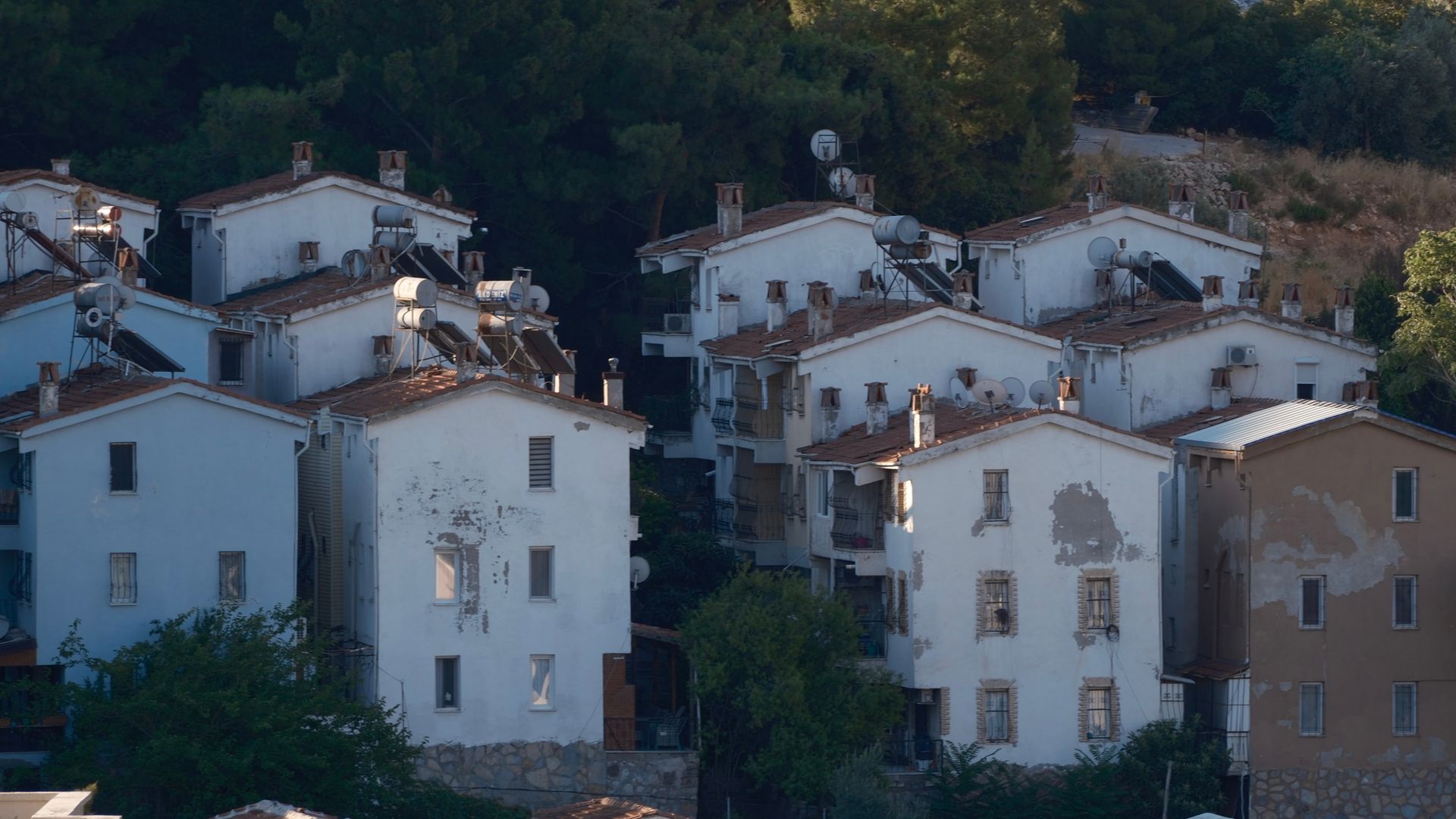
Most of the work here is replacement rather than first installation. A large share of Paphos housing already carries a solar cylinder on the roof, often fitted when the property was built, so the job is taking the old one down, dealing with what is underneath it, and putting a new one up. The condition of the existing frame, plinth and roof penetrations is what decides whether a quote is realistic.
The stock splits three ways. Along the coast through Kato Paphos, Chloraka and Kissonerga there are apartment blocks with flat concrete roofs and villas with a mix of flat and tiled roofs, all exposed to salt air. In the hillside belt at Peyia and inland at Tala, Emba and Tsada, pitched tiled roofs dominate and plots are terraced. Around Polis Chrysochous the housing is lower density and the installers are further away.
Occupancy is a further variable, and in Paphos a large one. The district has an unusually high proportion of part-year and holiday-let property, so systems stand idle through the hottest months and are then loaded hard. Stagnation in an empty house through high summer is harder on a collector circuit than daily use. Say plainly how the property is occupied before anyone specifies anything.
What it costs here versus the national range
Those figures are served from the price index at page load rather than being written into the text, so they stay current. The prices section holds the same data for the other districts.
A quote in the middle of the range should cover the collectors, the cylinder, frame and fixings, connection into the existing hot and cold pipework, wiring of the electric backup element, and removal of the old cylinder. Ask about what usually sits outside it: reinstating roof waterproofing where the old frame was bolted through, lifting equipment or hoist hire, work at the consumer unit, and safe access at height.
The cost drivers here are access and specification rather than tank volume. A cylinder carried through a garden is a different job from one going up a service lift or over a terraced plot. A closed-loop system with a glycol circuit costs more than an open-loop one. And on a seafront roof the frame, fixings and exposed valve bodies should be specified for a marine environment, which is a line item rather than an upsell.
Local conditions that change the job
Salt is the defining factor on the coast. Air along Kato Paphos and the seafront strip carries salt, and it attacks the parts nobody looks at: frame feet, bolts, and the small fittings at the tank connections. Galvanised or marine-grade fixings are the normal specification here, and when two quotes differ noticeably this is the first place the difference hides.
Roof type is the second. A thermosiphon system puts a full cylinder high above the roof surface, and that load has to land somewhere sensible. On the flat concrete roofs of the coastal blocks that means a ballasted or bolted plinth with the waterproofing properly reinstated. On the pitched tiled roofs common at Tala, Emba and Tsada it means fixings taken down to the rafters and tiles cut and flashed around them — slower work, and a detail worth seeing on paper.
Access is the third. On many Peyia hillside plots the approach road limits the size of delivery vehicle and crane that can reach the property at all, so a cylinder goes up by hand or on a small hoist. That shows up in labour rather than materials, so describe the approach at first contact.
Distance is the fourth. Polis Chrysochous and the Chrysochou valley sit well away from the main contractor base in Paphos town, and that travel time is priced into day rates — and into how long you wait when something needs attention.
Finally, the electrical side. Every one of these systems has a backup element, and on a replacement the temptation is to reuse the old cylinder's wiring. If the property has been extended or rewired since, have the circuit and its protection confirmed rather than assumed.
Companies covering the district
Solar thermal companies covering Paphos
8 companies shown here.
- 1
SPAS SHINDAROV
Paphos Centre, Paphos
SPAS SHINDAROV is listed on the Cyprus Energy Service register of certified solar water heating installers under registration ΕΗΘ/52/2023, valid to 2029-12-18. The entry covers ΠΑΦΟΣ, the paphos district. Details come from the public register and have not been verified with the business.
- 1
ΑΛΕΞΑΝΔΡΟΣ ΑΛΕΞΙΟΥ
Kissonerga, Paphos
ΑΛΕΞΑΝΔΡΟΣ ΑΛΕΞΙΟΥ is listed on the Cyprus Energy Service register of certified solar water heating installers under registration ΕΗΘ/31/2022, valid to 2028-02-15. The entry covers ΚΙΣΣΟΝΕΡΓΑ, the paphos district. Details come from the public register and have not been verified with the business.
- 1
ΑΝΔΡΕΑΣ ΚΑΝΑΡΗ
Paphos Centre, Paphos
ΑΝΔΡΕΑΣ ΚΑΝΑΡΗ is listed on the Cyprus Energy Service register of certified solar water heating installers under registration ΕΗΘ/49/2023, valid to 2029-06-26. The entry covers ΠΑΦΟΣ, the paphos district. Details come from the public register and have not been verified with the business.
- 1
ΑΥΞΕΝΤΗΣ ΠΟΛΥΚΑΡΠΟΥ
Agia Varvara, Paphos
ΑΥΞΕΝΤΗΣ ΠΟΛΥΚΑΡΠΟΥ is listed on the Cyprus Energy Service register of certified solar water heating installers under registration ΕΗΘ/38/2022, valid to 2028-05-16. The entry covers ΑΓΙΑ ΒΑΡΒΑΡΑ, the paphos district. Details come from the public register and have not been verified with the business.
- 1
ΚΩΣΤΑΚΗΣ ΠΑΪΣΗΣ
Paphos Centre, Paphos
ΚΩΣΤΑΚΗΣ ΠΑΪΣΗΣ is listed on the Cyprus Energy Service register of certified solar water heating installers under registration ΕΗΘ/35/2022, valid to 2028-03-14. The entry covers ΚΟΛΩΝΗ, the paphos district. Details come from the public register and have not been verified with the business.
- 1
ΜΙΧΑΛΗΣ ΚΑΝΑΡΗ
Paphos Centre, Paphos
ΜΙΧΑΛΗΣ ΚΑΝΑΡΗ is listed on the Cyprus Energy Service register of certified solar water heating installers under registration ΕΗΘ/50/2023, valid to 2029-06-26. The entry covers ΠΑΦΟΣ, the paphos district. Details come from the public register and have not been verified with the business.
- 1
ΠΑΝΑΓΙΩΤΗΣ ΠΑΪΣΗΣ
Paphos Centre, Paphos
ΠΑΝΑΓΙΩΤΗΣ ΠΑΪΣΗΣ is listed on the Cyprus Energy Service register of certified solar water heating installers under registration ΕΗΘ/21/2019, valid to 2031-11-16. The entry covers ΠΑΦΟΣ, the paphos district. Details come from the public register and have not been verified with the business.
- 1
ΣΩΤΗΡΗΣ ΜΙΛΛΕΡ
Paphos Centre, Paphos
ΣΩΤΗΡΗΣ ΜΙΛΛΕΡ is listed on the Cyprus Energy Service register of certified solar water heating installers under registration ΕΗΘ/51/2023, valid to 2029-06-26. The entry covers ΓΕΡΟΣΚΗΠΟΥ, the paphos district. Details come from the public register and have not been verified with the business.
These are companies whose registration we have checked, listed in no order of merit. We hold no ratings, testimonials or customer reviews, so use the list as a shortlist to approach and judge the quotes yourself. The areas section covers the district more widely, and the Paphos solar thermal page gathers the local work in one place.
Get these in writing: collector area and tank volume, open or closed loop, the corrosion specification near the sea, how roof penetrations are sealed and reinstated, the separate warranty periods for tank, collector and labour, and who carries out the electrical connection. Professional registers are held by ETEK, and anyone doing notifiable electrical work should give you their registration on request.
The replacement scheme contributes toward changing an electric water heater for a solar thermal system on an existing dwelling, and it pays out on completion against invoices. In a district with this much let and part-year property, the wording matters: the invoice has to line up with whoever claims, and a landlord replacing a system in a rented villa is in a different position from an owner-occupier. Settle who submits the claim before work starts.
Town by town
Paphos town and Kato Paphos. Flat roofs on blocks, mixed roofs on villas. Straightforward where the roof is private; on a block it is common property and the management committee decides. Marine-grade fixings within sight of the sea.
Chloraka and Kissonerga. Coastal and largely low-rise, with van access to most properties. Among the more straightforward replacements in the district, with the same salt specification as Kato Paphos.
Peyia and Coral Bay. Hillside plots where the approach decides the labour cost. Expect a site visit before a firm figure rather than a price by phone.
Tala, Emba and Tsada. Inland and higher, so less salt but more pitched tiled roofs. Ask how the frame is fixed and flashed, and ask whether a closed-loop circuit is being specified and why.
Polis Chrysochous. Fewer installers locally and travel time inside the day rate. Ask what the call-out arrangement is before you commit.
Common questions
How do I compare companies when there are no reviews on this site?
Compare the written quotes. Check collector area and tank volume, whether the loop is open or closed, the corrosion specification if you are near the sea, and what each quote excludes. Ask for nearby addresses with the same system. On a coastal roof the cheapest quote is usually the one missing marine-grade hardware and waterproofing reinstatement.
What size system does a Paphos household need?
Occupancy decides it more than floor area. A 150 to 200 litre thermosiphon system is the standard domestic specification, and the question to put to the installer is how many people draw hot water at once and when. A villa full of guests in July and empty in January is a different problem from a permanent household in the same building.
Is a solar water heater still worth fitting if I have photovoltaic panels?
Frequently, yes. Exported electricity earns less than the retail rate you pay, so heating water directly with a collector generally makes better use of limited roof area than sizing a photovoltaic array up to run an immersion heater.
What happens to the system while the house is empty?
It keeps heating water nobody uses, which is what stresses a collector circuit. Tell the installer the property is part-year so the system is specified for it, and ask what should be done at the start and end of a long absence.
How long does the replacement take?
A like-for-like swap on a house with good access is a short job. What extends it is a cylinder that has to be hoisted, an old plinth or pipe route that cannot be reused, waterproofing that needs making good, or committee permission that has not yet been settled.
Sources
- Ministry of Energy, Commerce and Industry — household energy support schemes — retrieved 2026-07-28
- Electricity Authority of Cyprus — domestic tariffs and connections — retrieved 2026-07-28
- Cyprus Scientific and Technical Chamber (ETEK) — registered professionals — retrieved 2026-07-28
01More on this topic
Same cluster.Different question.
 8 min read
How to Choose a Solar Water Heater Company in Cyprus
What to check before you accept a solar water heater quote in Cyprus: registrations, cylinder sizing, roof load, the grant, and what a quote lists.
 7 min read
Solar Water Heater in Larnaca: Costs and Local Companies
What a solar water heater installation in Larnaca, Cyprus involves, the published cost level, and the grid and grant details that shape it.
 7 min read
Solar Water Heater in Famagusta: Costs and Local Companies
What a solar water heater installation in Famagusta, Cyprus involves, the published cost level, and the grid and grant details that shape it.
Where to go next
Companies, districts and the rest of the guides on this subject.
Thinking of doing this?Get up to five quotes, free.
Send us your roof and your electricity bill and we will gather quotes from installers who work from your numbers.