Solar panel installation
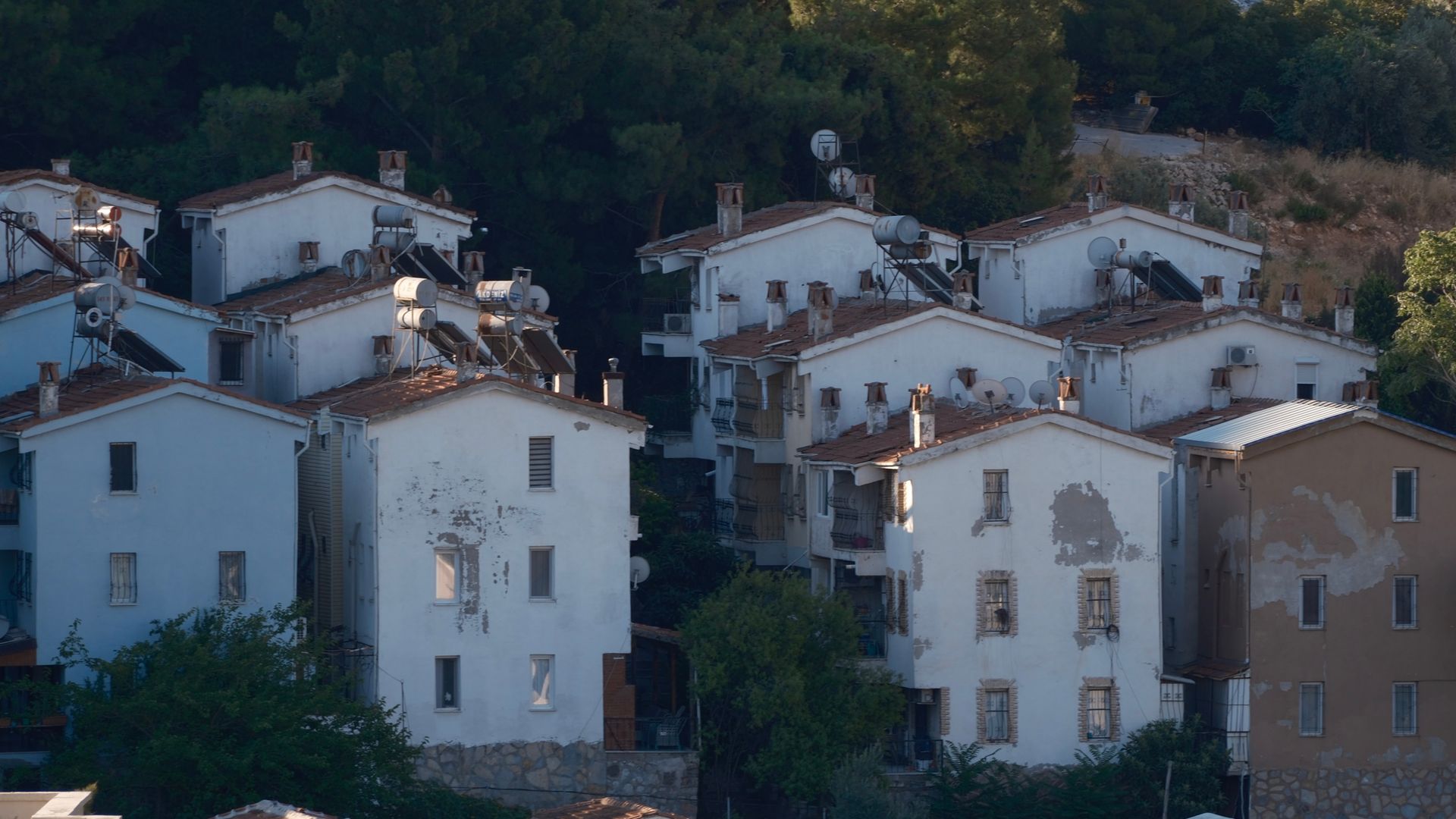
Roof Shading From Domestic Water Tanks
Assess tank shadows before choosing a rooftop solar layout, moving plumbing or paying for additional shade-management equipment.
6 min read

Solarpanel.cy Editorial publishes practical guides to solar installation businesses, equipment purchasing and customer records. Its comparisons explain the business requirements, source information and reasoning behind each recommendation.
Published · Updated
Decide whether to move panels, equipment or neither
A domestic water tank can occupy the same valuable roof space as a proposed photovoltaic array. The household decision is not simply whether the tank casts a shadow. It is whether a different panel layout, a different electrical design or relocation of roof equipment offers a worthwhile result once plumbing, access and roof work are included. A midday photograph cannot settle that comparison.
Begin by identifying the equipment accurately. A cold-water storage tank, a solar hot-water cylinder and a solar thermal collector have different functions and relocation implications. Moving a tank may also affect pipe routes and maintenance access. Ask the solar provider to show a layout that retains the existing equipment before proposing its removal. This creates a practical baseline against which the extra work and any modelled benefit can be assessed.
Create an observation record without surveying the roof yourself
Provide the installer with existing drawings, accessible photographs and a description of the tank arrangement. If observations can be made safely from an established access point, record the date, approximate time and direction of the photograph. Do not climb onto an unsafe roof or move equipment to improve the picture. The installer should obtain the measurements needed for design through an appropriate site visit.
Record neighbouring obstructions too: parapets, stair enclosures, aerials and other tanks may remain important after one tank is moved. A useful survey distinguishes measured dimensions from estimates and identifies roof areas that must remain available for servicing. The household's photographs help explain the concern; they do not replace a seasonal shading assessment. Ask the provider how its proposal represents changing sun positions rather than accepting an unqualified statement that the roof is sunny.
Understand what shade management can and cannot do
Shading behaviour depends partly on how modules and inverters are arranged. The US Department of Energy explains the distinction between string inverters and microinverters, including the independent operation of modules with microinverters. That provides useful technical background, but it does not establish the best equipment for this roof or any Cyprus approval requirement. Department of Energy inverter guidance.
Shade management is not limited to adding electronics behind every module. SMA describes an inverter-integrated optimisation function in compatible products. Its page supports the existence and intended role of that manufacturer's approach; it does not prove that it outperforms every alternative on a particular home. Ask bidders to explain their proposed configuration and modelled losses. No inverter or optimiser can generate electricity from sunlight that the tank prevents from reaching a module. SMA ShadeFix.
Request comparable layouts before approving relocation
Ask for at least a retained-tank baseline and a reasoned alternative if relocation is proposed. Each layout should identify module positions, orientation, equipment access and the assumptions used for shade losses. Keep other modelling inputs consistent so the effect of the layout change is visible. A proposal with more modules is not automatically better if several occupy poorly performing positions or obstruct essential servicing.
Where the installer proposes a different inverter arrangement, ask whether the alternative estimate changes the layout, equipment or both. Separate those effects where possible. The Department of Energy's design overview describes modules, inverters, mounting and storage as parts of a system; the buying implication is to assess the whole proposal rather than one appealing component. A battery can shift available generation in time, but does not remove the tank's shadow. Solar photovoltaic system design basics.
Treat tank movement as a separate work package
Before accepting relocation, obtain a plumbing assessment covering the equipment involved, new position, pipe routing, isolation and restoration of service. If supports, loading or roof construction raise questions, obtain the relevant building professional's assessment. The solar installer should not assume that a suggested clear patch is suitable for a relocated full tank merely because it is outside the proposed array.
Use the existing guide to choosing a solar water-heater company when the affected equipment belongs to a hot-water system. Keep that scope distinct from PV design. Identify who removes redundant supports and who makes good the roof. Where existing condition or a proposed penetration needs separate assessment, request a defined roof waterproofing assessment, with responsibilities agreed before equipment is lifted or new fixings are installed.
Relate the layout to when the household uses power
A household should explain its observed electricity use alongside the roof information. Note whether major consumption occurs while people are home during the day, in the early evening or overnight. Use bills and available interval data where possible; avoid presenting a guessed routine as measured demand. The installer can then distinguish annual generation from the proportion likely to be useful under the household's actual arrangements.
Consider a clearly hypothetical home whose tank shades a proposed row during part of the afternoon. One design retains the tank and omits that row; another relocates the tank and includes it. The owner works away from home on weekdays, so additional afternoon generation cannot simply be valued as immediate household consumption. The provider should show how the model treats self-consumption, export or storage under the applicable proposal. No financial benefit follows merely from fitting the extra row.
Use stop points before trades depend on each other
First, stop before final layout approval until the installer has resolved the tank dimensions, significant obstructions and service-access requirements. Second, stop before relocation until plumbing, support and roof-making-good responsibilities are accepted. Third, stop before mounting until any required roof preparation and agreed prerequisite work are complete. These decisions prevent the next trade from discovering that its assumed working area is unavailable.
The coordinator should identify the person releasing each stage and the evidence required. For relocation, that might include the plumber's completion record and the responsible party's confirmation that roof reinstatement is complete. For the PV stage, retain the final layout and the installer's applicable commissioning documentation. These are project coordination requests, not a substitute for professional checks or a claim that one generic checklist satisfies every Cyprus installation.
Compare proposals with the assumptions still visible
A useful offer states what was surveyed, what remains assumed, and which tank-related works are included. Request the shading method, layout version, generation estimate basis and exclusions. Where a bidder promises that optimisers solve the issue, ask for the corresponding design evidence and compatible equipment details. Where another proposes relocation, ask for its full work boundary rather than comparing only the PV equipment total.
After installation, preserve photographs and the final arrangement so later tank replacement does not accidentally introduce a new obstruction. If equipment is moved or enlarged, ask the provider whether the design assessment needs updating. Use Solarpanel.cy's residential installation comparison to request site-specific proposals that address the same tank constraint. The decision should follow measured roof conditions, realistic household use and coordinated trade responsibilities, with any remaining uncertainty clearly stated.
Frequently asked questions
Can a single photograph establish the tank's annual shading effect?
No. It records one moment. A design needs measured geometry and an assessment that represents relevant seasonal and daily sun positions.
Do optimisers eliminate the need to consider tank shadows?
No. Ask how the proposed equipment and layout manage the particular shading pattern. Electronics cannot replace blocked sunlight.
Should the tank always be moved to fit more panels?
No. Compare a retained-tank design with the full relocation alternative, including plumbing, supports, access and roof reinstatement.
Will a battery compensate for reduced generation?
A battery can store available energy for later use. It does not restore generation lost because sunlight was blocked.
Sources
- US Department of Energy — Inverters and grid services basics — retrieved 2026-10-15
- SMA — ShadeFix — retrieved 2026-10-15
- US Department of Energy — Solar photovoltaic system design basics — retrieved 2026-10-15
01More on this topic
Same cluster.Different question.
 6 min read
Solar Monitoring on a Rented Router
Restore a useful solar monitoring connection after router changes by separating internet access, account permissions and equipment faults.
- 6 min read
Home Battery Capacity: Reconcile the Numbers in Your Quote
Compare battery quotes by reconciling nameplate energy, usable capacity, reserves and delivered energy against household usage.
- 6 min read
Solar Panels After a Dust Storm: Safe Ground-Level Checks
Record visible changes and solar monitoring data after a Cyprus dust storm, then decide whether to monitor, request cleaning or call an installer.
- 6 min read
Bird Nesting Beneath Solar Panels: The Household Decision
Assess nesting beneath rooftop panels, protect active birds and compare compatible barrier proposals without assuming a generation benefit.
- 6 min read
Solar App Ownership After a House Sale in Cyprus
Transfer solar monitoring access after a house sale, confirm live reporting and compare providers for the remaining handover work.
- 6 min read
Solar production data after an internet outage
Work out whether missing solar data means lost generation, delayed uploads or a separate fault, and prepare useful evidence for your installer.
Where to go next
Companies, districts and the rest of the guides on this subject.
Thinking of doing this?Get up to five quotes, free.
Send us your roof and your electricity bill and we will gather quotes from installers who work from your numbers.