Solar water heating
Solar water heaters on Cyprus holiday rentals and second homes
What a solar water heater costs on a Cyprus holiday let, when to schedule the work around bookings, and what to specify so it survives a coastal roof.
7 min read

Maria runs the data collection behind our solar pages. She checks installer registrations against the electrical contractor register, records quoted system prices, and tracks changes to the grant schemes as they are published.
Published
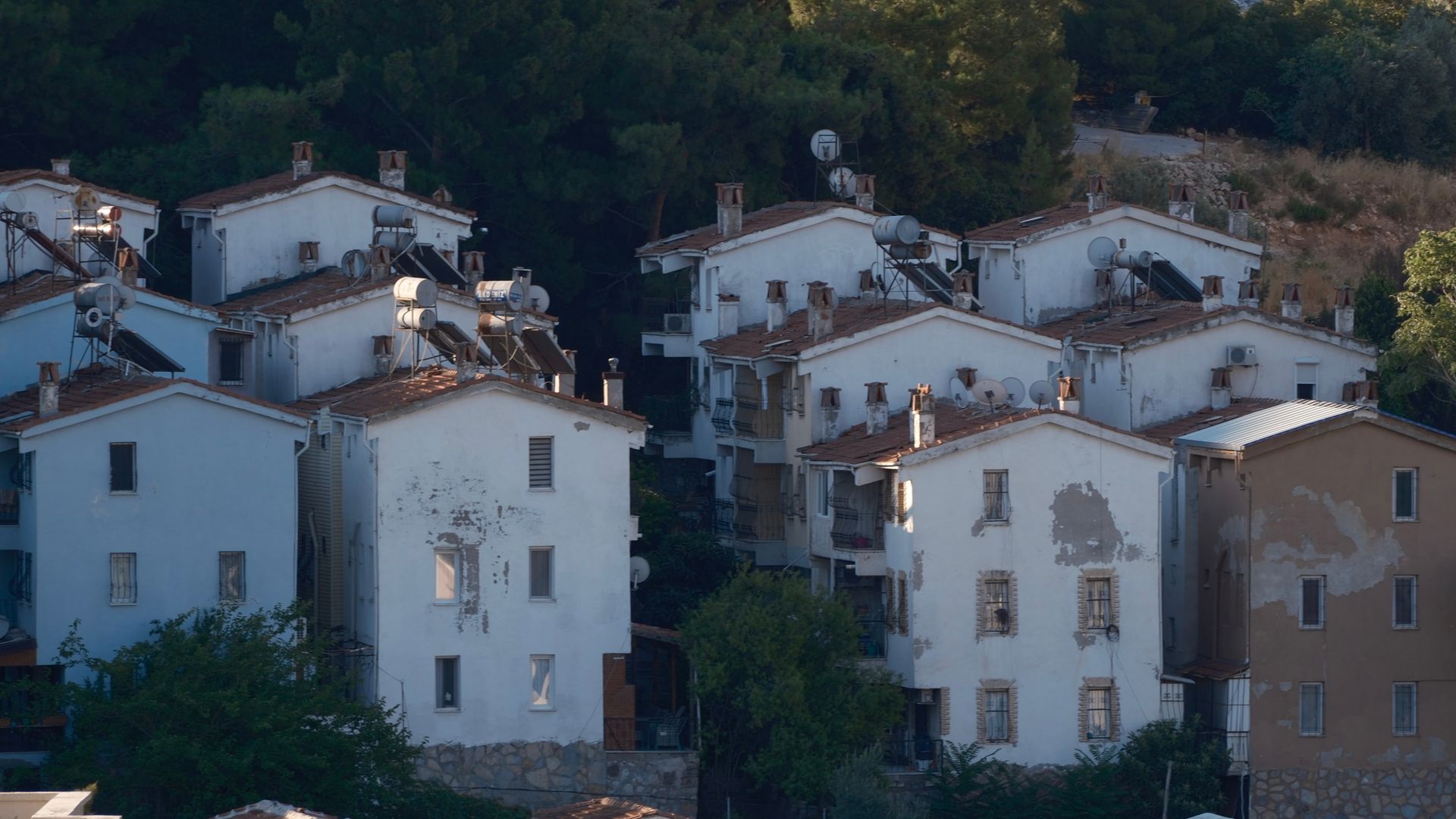
On a property you let out, the price of a solar water heater is not the number that matters. Installed systems run from €700 to €1,400, with the middle of the market around €950 for a 150 to 200 litre thermosiphon unit — the common Cypriot type, where the cylinder sits on the roof above the collectors and water circulates without a pump. That figure is smaller than one interrupted changeover week. The decision on a rental is about timing, specification and who notices when something fails, not about shaving a little off the quote.
Why rental property is different
Hot water demand in a let is shaped nothing like a household's. A family draws water across the whole day. A houseful of guests back from the beach draws it all in one evening window, on the day the cylinder was already half emptied by the previous group's checkout showers. A system sized for the bedroom count on paper can still run cold on the pattern that actually happens.
The bigger difference is who finds the fault. In your own house, tepid water on a Tuesday is noticed on Tuesday. In a let, the first person to find it is a guest, and it reaches you as a complaint in the middle of a stay, when your options are an emergency call-out at the summer rate or a partial refund.
Then there is the failure mode nobody sees at all. Almost every solar cylinder in Cyprus has an electric backup element. When the collectors, the circulation or the thermostat go, the element quietly takes over. Guests are perfectly happy. You find out from an electricity bill months later, by which point the system has been running as an ordinary immersion heater through the most expensive part of the year.
Second homes have the opposite problem. A closed-up house in July has full sun on the collectors and no draw-off at all, so the cylinder sits at stagnation temperature for weeks — harder on seals, gaskets and the sacrificial anode inside a glass-lined cylinder than daily use would be. An empty house is not a rested system.
Scheduling around bookings
Treat the work as seasonal, because the letting calendar already is. In Ayia Napa the accommodation stock is predominantly seasonal, and refurbishment concentrates into November to March. Protaras runs the same rhythm with an even higher share of holiday lets, which is why the gaps between bookings there are short. That window is your maintenance season, and it is also when installers have capacity — in August they are working through emergency calls, and you are one of them.
What fits into a changeover gap and what does not:
A same-day job, usually
Element or thermostat replacement, an anode change, descaling, a leaking connection, a failed non-return valve. Access to the roof and an isolation valve already in place are what decide it.
Not a changeover job
A full system replacement — collectors, frame, brackets, cylinder and new pipework. Materials have to reach the roof, old fixings have to come off, and any penetration through the slab needs to be resealed and left to cure.
Neither, if access is the constraint
On hillside plots in Peyia, steep access roads limit the size of delivery vehicle that can reach the property. A 200 litre cylinder going up by hand is a different day's work from one lifted off a truck, and it belongs in the quote rather than in a surprise.
Give the installer the facts that set the duration before they price it: the route to the roof, whether there is a lift, whether the roof is common property in a block — in which case the management committee decides, on their meeting schedule rather than yours — and the changeover times you have to protect. Ask for a fixed appointment window rather than a day, and ask what happens if the part is not on the island.
If you run more than one property, the cheapest insurance available is a spare element and a spare thermostat in a cupboard. They are the parts that fail most, and the ones that turn a short visit into a long wait for stock.
Durability over appearance
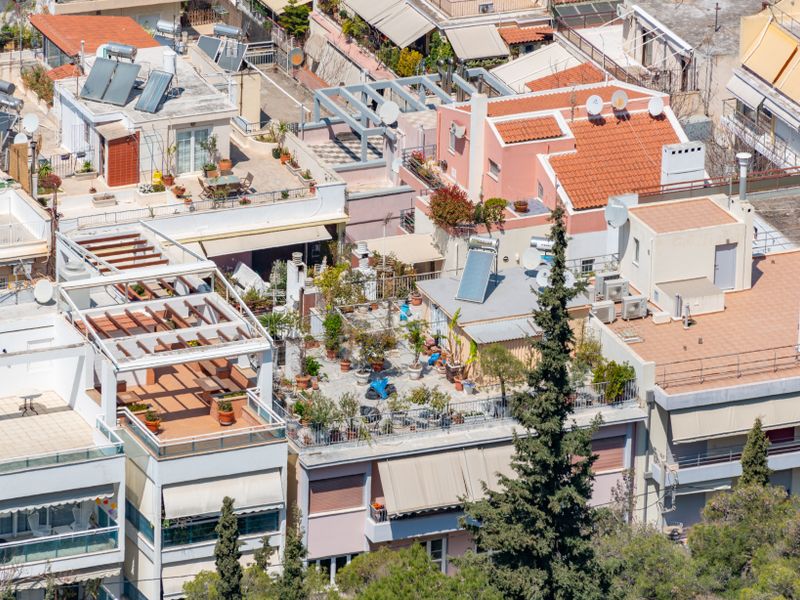
Specify for where the roof actually is. In Kato Paphos the salt-laden coastal air is severe enough that galvanised and marine-grade fixings are the standard rather than an upgrade, and that applies to the collector frame, the roof anchors and the clamps as much as to the cylinder itself. A stainless cylinder on mild steel brackets is a system that fails from the bottom up.
The questions worth asking before you accept a quote:
- What is the cylinder made of, and does it have a sacrificial anode? On a glass-lined steel cylinder the anode is a consumable. Replacing it on schedule is a small job. Replacing the cylinder because nobody ever did is not.
- Flat plate collectors or evacuated tubes? Tubes are individually replaceable, so on a let a damaged tube is a part rather than a system. They are also more fragile — weigh that against how exposed the roof is.
- How is every roof penetration sealed, and who carries that responsibility? Water coming through a guest bedroom ceiling in October will cost you more than the heater ever did.
- Are there isolation valves and a drain point? They cost very little at installation and they are the difference between an hour's repair and a day's.
- Is the backup element on its own labelled switch, reachable from ground level? You want to be able to tell a caretaker over the phone which switch to look at.
Then add the line installers never include unless asked: a note in the guest information pack saying the water is solar heated, that it recovers after a run of showers rather than instantly, and one number to call. A good share of the "emergency" calls on lets turn out to be a tripped switch and a guest with no way of knowing.
Cost against nightly rate
Start from what installed systems actually cost, then set that against the revenue the property earns.
| Work | Indicative range | Midpoint | Published sources |
|---|---|---|---|
| Solar water heatingComplete domestic solar water heater (storage tank plus collectors) as sold in Cyprus. Low and median reflect retail equipment prices for 160-200 L double- and triple-energy units; the high figure is a 300 L pressurised system with two 2.5 m2 collectors, support stand and installation kit. Fitting labour is not separately evidenced in these sources and may be additional. | €1,000–€2,500per system | €1,300 |
Indicative range compiled from published sources, not a quote. It shows the level those sources report for this kind of work, not what your job costs. Only a site visit and a written quote for your actual scope produce a real figure. Sources compiled 2026-08-02.
Against a mid-season nightly rate, the installed cost of a replacement system is a small number of nights. A refunded stay plus an emergency summer call-out can reach the same figure without leaving you with a new system at the end of it. That is the comparison to run on a rental — not payback against electricity, which is the calculation for an owner-occupied home.
There is also support available. The solar water heater replacement scheme pays toward replacing an electric water heater with a solar thermal system on an existing dwelling, paid on completion against your invoices rather than up front. Whether a property you let out qualifies depends on the scheme's own terms, which are set by the Ministry of Energy, Commerce and Industry and change from year to year. Read the current conditions before you assume either way, and keep the invoices regardless.
For the underlying figures rather than the summary, the price index pages carry the full ranges by system type, the solar water heating section covers specification in more depth, and the district pages show what each installer covers. Registered solar thermal installers are listed across all five districts, though coverage thins away from the main towns.
Registered solar thermal installers
8 companies shown here.
Ο υδραλικός στο σπίτι σας Μάριος Κασινιδης & υιοί ltd
Nicosia Centre, Nicosia
Ο υδραλικός στο σπίτι σας Μάριος Κασινιδης & υιοί ltd is a plumbing business in Nicosia Centre, in the Nicosia district. Recorded services include leak detection, bathroom installation, water tanks.
- Plumbing
- Replumbing
- Bathroom renovation
- Solar water heating
- +4 more
Charalambos Thoma & Sons
Lakatamia, Nicosia
Charalambos Thoma & Sons is a plumbing business in Lakatamia, in the Nicosia district. Recorded services include leak detection, bathroom installation, water tanks.
- Plumbing
- Replumbing
- Bathroom renovation
- Solar water heating
- +4 more
Moudouros
Nicosia Centre, Nicosia
Moudouros is a plumbing business in Nicosia Centre, in the Nicosia district. Recorded services include leak detection, bathroom installation, water tanks.
- Plumbing
- Replumbing
- Bathroom renovation
- Solar water heating
- +4 more
- 1
SPAS SHINDAROV
Paphos Centre, Paphos
SPAS SHINDAROV is listed on the Cyprus Energy Service register of certified solar water heating installers under registration ΕΗΘ/52/2023, valid to 2029-12-18. The entry covers ΠΑΦΟΣ, the paphos district. Details come from the public register and have not been verified with the business.
- 1
ΑΛΕΞΑΝΔΡΟΣ ΑΛΕΞΙΟΥ
Kissonerga, Paphos
ΑΛΕΞΑΝΔΡΟΣ ΑΛΕΞΙΟΥ is listed on the Cyprus Energy Service register of certified solar water heating installers under registration ΕΗΘ/31/2022, valid to 2028-02-15. The entry covers ΚΙΣΣΟΝΕΡΓΑ, the paphos district. Details come from the public register and have not been verified with the business.
- 1
ΑΝΔΡΕΑΣ ΑΝΔΡΕΟΥ
Kiti, Larnaca
ΑΝΔΡΕΑΣ ΑΝΔΡΕΟΥ is listed on the Cyprus Energy Service register of certified solar water heating installers under registration ΕΗΘ/36/2022, valid to 2028-03-14. The entry covers ΠΕΡΒΟΛΙΑ, the larnaca district. Details come from the public register and have not been verified with the business.
- 1
ΑΝΔΡΕΑΣ ΑΝΤΩΝΙΟΥ
Larnaca Centre, Larnaca
ΑΝΔΡΕΑΣ ΑΝΤΩΝΙΟΥ is listed on the Cyprus Energy Service register of certified solar water heating installers under registration ΕΗΘ/37/2022, valid to 2028-03-14. The entry covers ΛΑΡΝΑΚΑ, the larnaca district. Details come from the public register and have not been verified with the business.
- 1
ΑΝΔΡΕΑΣ ΙΩΑΝΝΙΔΗΣ
Strovolos, Nicosia
ΑΝΔΡΕΑΣ ΙΩΑΝΝΙΔΗΣ is listed on the Cyprus Energy Service register of certified solar water heating installers under registration ΕΗΘ/42/2022, valid to 2028-06-07. The entry covers ΣΤΡΟΒΟΛΟΣ, the nicosia district. Details come from the public register and have not been verified with the business.
Common questions
How often should a solar water heater on a let be serviced?
Once a year, scheduled inside the off-season window rather than when something goes wrong. On a rental the service is doing a different job from a service at home: it is confirming that the collectors, not the backup element, are actually heating the water. Ask the installer to check the element's consumption and report it, because that is the fault you cannot see.
Is it a fault if the backup element runs in summer?
In Cyprus, in July, a working solar water heater should be carrying the load with very little help. An element running regularly through high summer points at a fault — scale, a failed thermostat, a stuck non-return valve or collectors that are not circulating. It is worth investigating rather than tolerating, because it is the most expensive way to heat water on an Electricity Authority of Cyprus domestic tariff.
Does the replacement grant apply to a property I rent out?
The scheme is written around replacing an electric water heater on an existing dwelling, and the eligibility conditions are what decide the answer for a second home or a let. They are published by the Ministry and revised periodically, so check the current terms before the work starts rather than after — support paid against invoices is difficult to recover retrospectively.
Who is responsible if the roof leaks after installation?
Whoever made the penetration, if you agreed that in writing beforehand. Get the scope to state who seals roof fixings and what happens if water gets in afterwards. On a flat Cypriot roof with an existing waterproofing layer this is the clause most worth having, and it is almost never in a verbal quote.
Sources
- Ministry of Energy, Commerce and Industry — energy support schemes — retrieved 2026-07-28
- Electricity Authority of Cyprus — domestic supply and tariffs — retrieved 2026-07-28
Where to go next
Companies, districts and the rest of the guides on this subject.
Thinking of doing this?Get up to five quotes, free.
Send us your roof and your electricity bill and we will gather quotes from installers who work from your numbers.